What’s so bad about the three true outcomes anyways?
It’s possible that no sport wrings its hands about the state of the game as much as baseball. Last season, it was the construction of the actual baseball, or the microsecond pop off the base by a runner that is caught on replay. Over the years, there’s been any number of minor crises to grip the game, from pine tar to corked bats to scuffed baseballs.
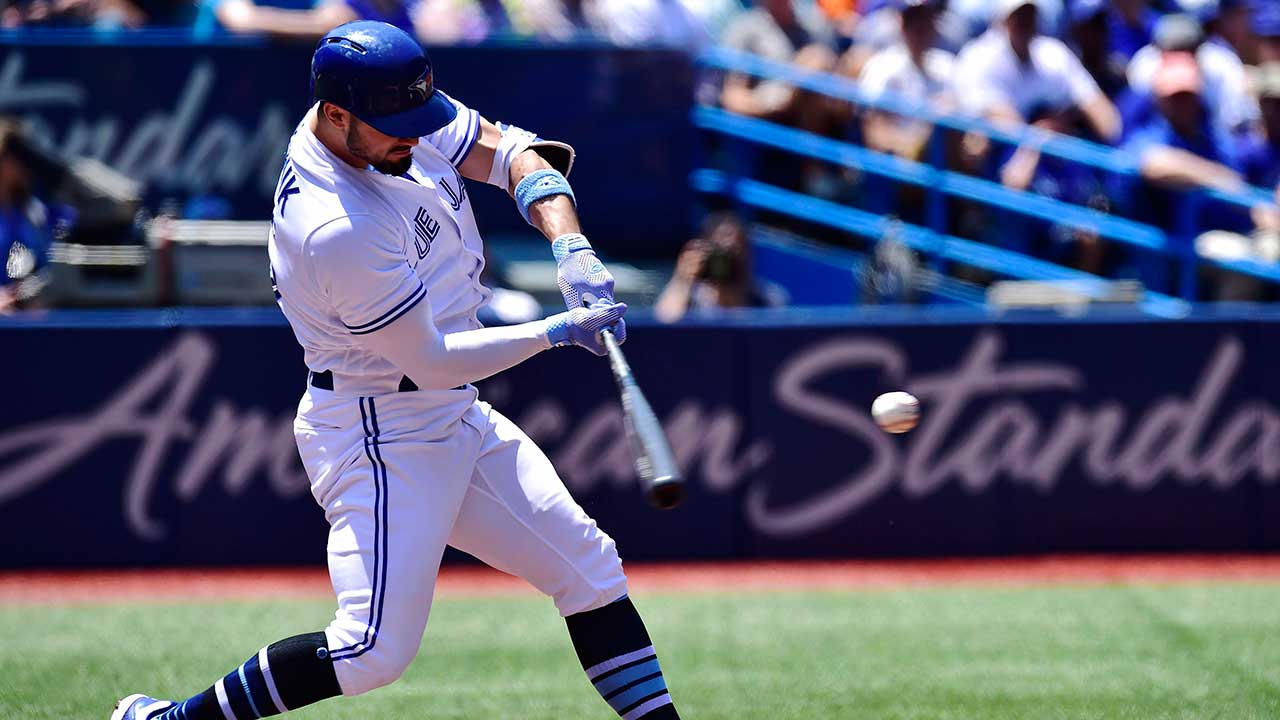
On that note, 2018 is the season of balls in play, or the lack thereof. The fact Major League Baseball is on pace to have close to 10,000 fewer balls hit towards fielders as opposed to a decade ago is cited as a primary factor for the lack of entertainment in the game, and the decline in attendance. At the same time, defensive shifts are cited as the reason why hitters are employing uppercut swings, either hitting balls over shifts or striking out while failing to do so.
And lest you think this is a straw man being set up, one need only listen to the latest episode of the podcast A Swing and a Belt, where four highly respected baseball minds – Jayson Stark, Buster Olney, Jon Paul Morosi and host Dan Shulman – all bemoan the current state of the game or convey the concerns they are hearing from those within it.
[snippet id=3966765]
Listening to those conversations, there is an essential assumption that drives the narrative: that a ball in play is better than a ball not in play.
To be clear about the definitions, a ball in play is either a ball turned into an out by the fielders, or a hit that lands in the field of play. On the other hand, strikeouts, walks and home runs are all considered balls that are not in play.
Before going any further, let’s indulge in a fun bit of reductio ad absurdum to illustrate a point: the baseball that Randal Grichuk caught over the fence in the ninth inning in Houston this week was destined to not be a ball in play, until he leapt up and made it so. This was very entertaining for Jays fans, but do you suppose Houston fans were relieved to see the ball enter Grichuk’s glove rather than the one of the fan behind him, for the good of the game?
Or when Marcus Stroman struck out Mike Trout and Justin Upton to finish off an inning in Anaheim earlier in the week, would we as Jays fans have been more entertained by an infield pop-up and a dribbler to the second baseman?
While the 10,000 fewer occurrences of “action” in the game sounds dramatic and concerning, it is essentially four plate appearances per game that end in a strikeout, walk or home run versus what happened in 2009.
So back to the question from the top: what’s so bad about those events? Why should we be attempting to find ways to legislate them out of the game?
The idea that the only entertaining parts of games are those where balls are hit at fielders – or where they ain’t – shouldn’t go unchallenged. It ignores the fact that so much of the sport is played out in the gamesmanship between the pitcher and the hitter. When you watch a great at-bat in a meaningful game that goes to a full count, the tension that is built in the moment can be catalyzed into thrills with any of the three true outcomes.
[relatedlinks]
There’s certainly an argument that the battle between the pitcher and hitter might best be enjoyed from the comfort of your sofa, as opposed to a seat in the 500 level, and the discussion of why baseball’s attendance is waning deserves a fair hearing.
(Although rising ticket costs and pricing strategies that look to maximize revenue pulled out of fans’ pockets as opposed to filling seats should probably get an examination before anyone suggests monkeying with the rules of the game.)
Still, if you think about the plays that will make you rise to your feet and roar when you’re at the stadium, there are few plays in baseball more exciting than either a home run or a strikeout. You don’t often high-five your seatmates when an outfielder tracks down a can of corn.
And even walks deserve a level of appreciation, given all that we know about the importance of plate discipline and not making outs to the ultimate success of the team.
This isn’t to say that having the conversation about making the game better is invalid. But isn’t there an argument that more players who possess the skills required to strike out a batter, hit a home run or work patiently to be given a base on balls are actually signs that the game is getting better?