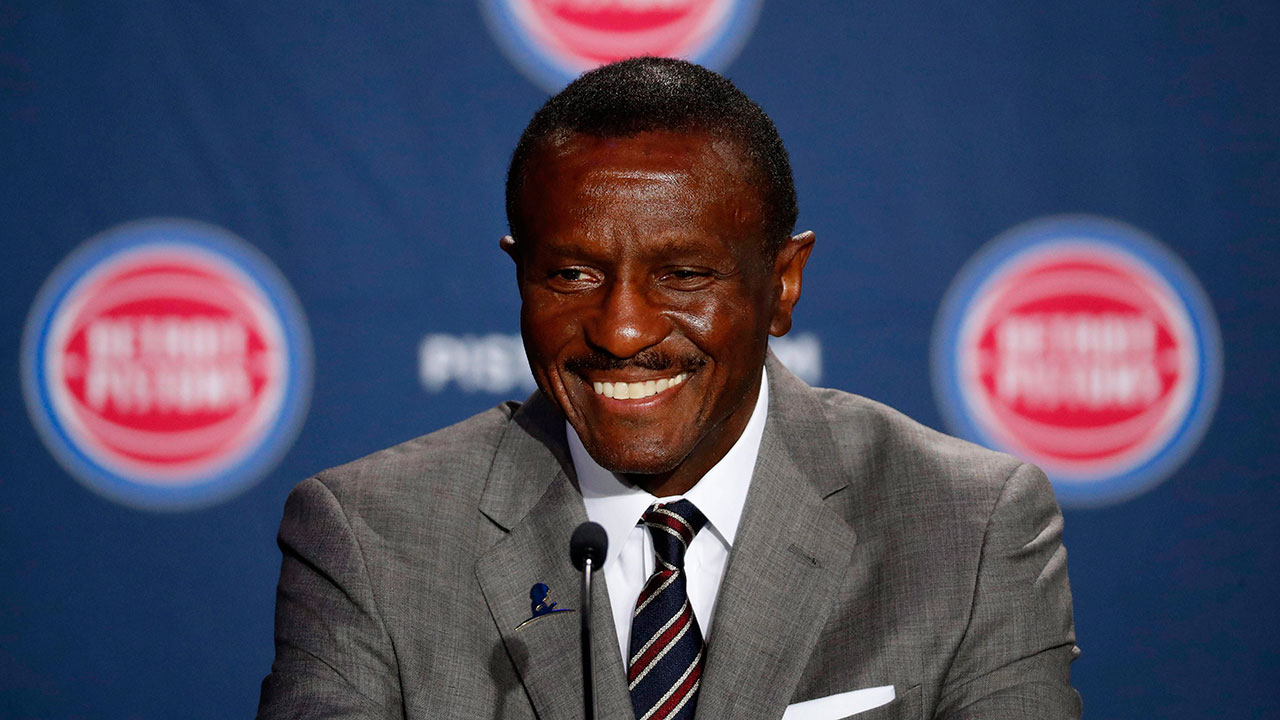

At the helm of the Toronto Raptors for the past seven seasons, Dwane Casey was fired after getting swept by the Cleveland Cavaliers for the second year in a row, shortly after being named the NBA’s coach of the year.
A bittersweet ending for Toronto’s most successful coach ever.
But as one chapter of Casey’s coaching journey ended, another began, just a four-hour trip down the 401, as he took over head coaching duties of the Detroit Pistons.
On Wednesday, Casey returns to Toronto looking to exact some revenge on the team that let him go, and though his 6-6 Pistons squad isn’t anywhere close to the level he left the Raptors, the early returns have been positive for Detroit thus far.
Here are three ways the Pistons have improved under Casey already.
[snippet id=4267701]
1. Griffin’s resurgence
After a remarkable start to his career that saw him make five straight all-star games, Blake Griffin’s reputation went into a nosedive thereafter.
Whether it was constant injury or the fact his “Lob City” Los Angeles Clippers just couldn’t get over the hump, Griffin’s time in the limelight as one of the NBA’s elite appeared over, despite continually putting up strong numbers.
Last season, Griffin was traded to the Pistons as the Clippers moved on from the Griffin-Chris Paul years. In 25 games with Detroit, Griffin averaged 19.8 points and 6.6 rebounds on 43.3 per cent shooting as he had difficulties adjusting to since-fired Stan Van Gundy’s more rigid offensive system, as well as his new teammates and environment.
Twelve games into his first full season with the Pistons, Griffin looks brand new — or rather, a lot like the all-star who terrorized the league during his early years.
On Oct. 23, against the Philadelphia 76ers, Griffin had a career-high 50 points in a 133-132 overtime win to officially put himself, and the Pistons, back on notice. In that game, we saw a lot of the old Griffin.
Such as post-ups:
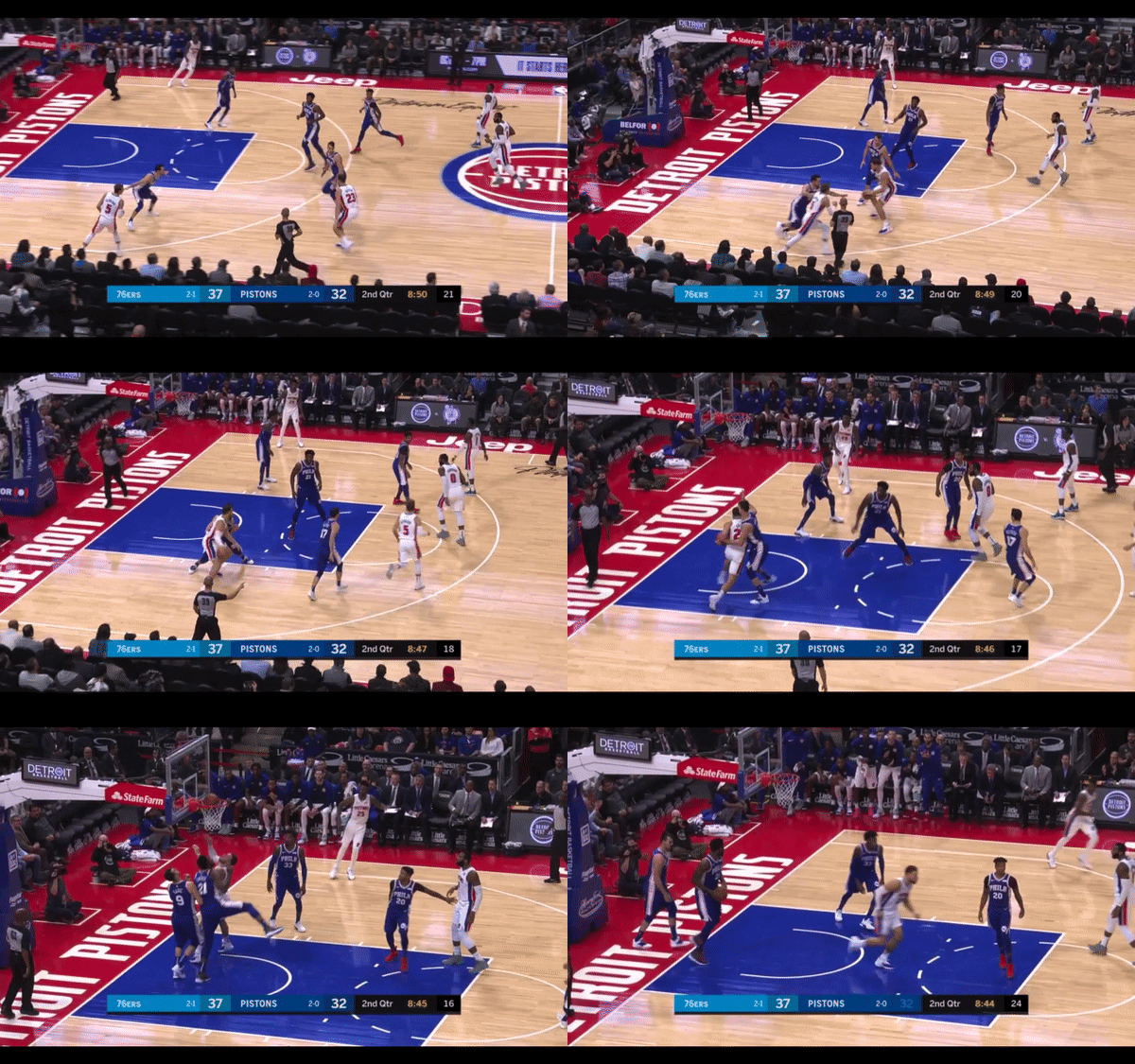
And transition dunks:
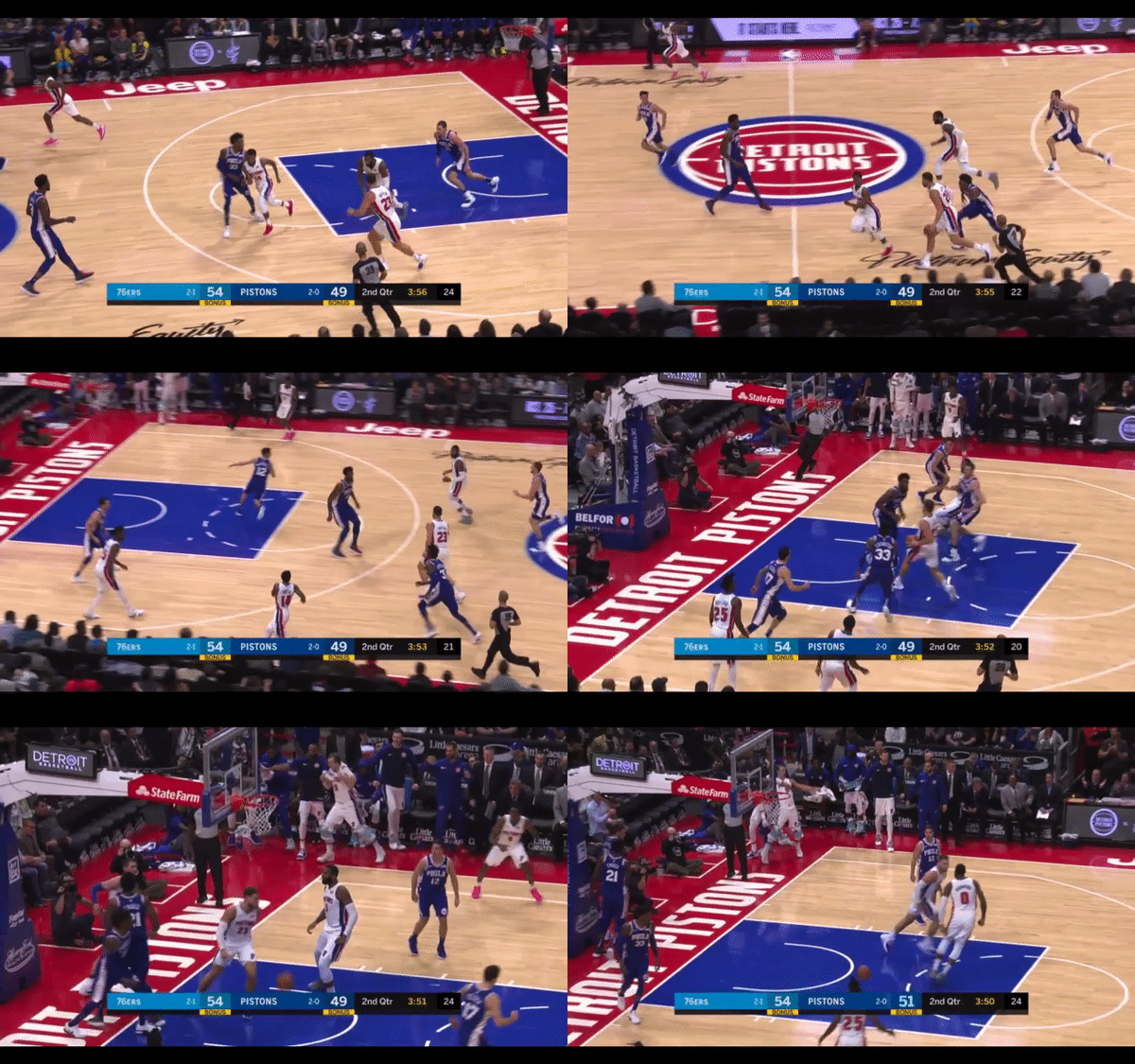
That we were able to see Griffin at his best this season after such a long time isn’t surprising. It’s just an example of what Casey has been doing all season long with him.
Griffin is averaging 11.3 points in the paint per game this season, the most since he averaged 13.4 during his monster 2013-14 campaign that saw him put up 24.1 points and 9.5 rebounds, eerily similar figures to the 24.1 points, 10.2 rebounds he’s averaging now.
In that 2013-14 campaign, Griffin averaged 10.9 post-up touches per game and this season he’s averaging 9.1 per game.
Obviously, a player like Griffin is most effective the closer he is to the basket, but those 9.1 post-up attempts are the most Griffin has had since the 2014-15 season, which suggests Casey and his Pistons staff probably tailor-made a gameplan to fit Griffin’s strengths.
Even more impressively, Casey and Co. have managed to accomplish this while making use of the three-point stroke that Griffin’s been working on for the past couple years as he’s now both taking (5.8 per game) and making (2.1) more threes than ever.
The result is a Griffin the likes of which the league has never seen before, blending the player he used to be and the one he adjusted himself to as his athleticism has faded over the years. The result: the best version of him we’ve ever seen.
And he has Casey to thank a fair bit for that.
[snippet id=3360195]
2. Imported offence
Casey was widely praised for changing Toronto’s offensive scheme last season from an isolation-heavy, long-two loving, stagnant slog into a fluid, modern attack predicated on ball movement and three-point shooting.
Current Raptors coach Nick Nurse gets a lot of credit for being the man to change the Raptors’ offensive ways as an assistant, but Casey still had to greenlight and run it himself. As such, that offence was Casey’s, and he’s brought it with him to Detroit.
On the surface, Detroit’s offence has taken a marked dive compared to what the Pistons were doing when Van Gundy was in charge. Their 105.5 offensive rating is a full point worse than last season’s, their 29th-ranked 31.4 per cent three-point shooting is decidedly inferior to the 37.3 per cent they shot the season before and their 20.8 assists per game now compared to the 22.8 they were averaging before suggests they aren’t passing as effectively.
Numbers don’t lie, until they do. In this case, they don’t tell the whole story.
The Pistons are playing better offensively, even if the results aren’t necessarily showing it because they’ve upped their volume by a ton.
They’re shooting a much worse percentage from three because they’re averaging nearly six whole attempts more per game. They’re averaging less assists because they’re making approximately 12 more passes per night. They’re less efficient offensively, in general, because they’re playing with about five more possessions per contest than before.
Simply put, the poor offensive numbers are merely a result of growing pains as Casey implements his new system. Not everything will work the way it did for the Raptors, a team that had made four straight post-season appearances before changing things up. Detroit’s in a different situation than Toronto was.
But that isn’t to say there have been no tangible results from this new system. Two-time all-star centre Andre Drummond has really excelled with the new space afforded him as he puts up career numbers in points (19.6), total rebounds (16.6) and offensive rebounds (6.2) to start the year.
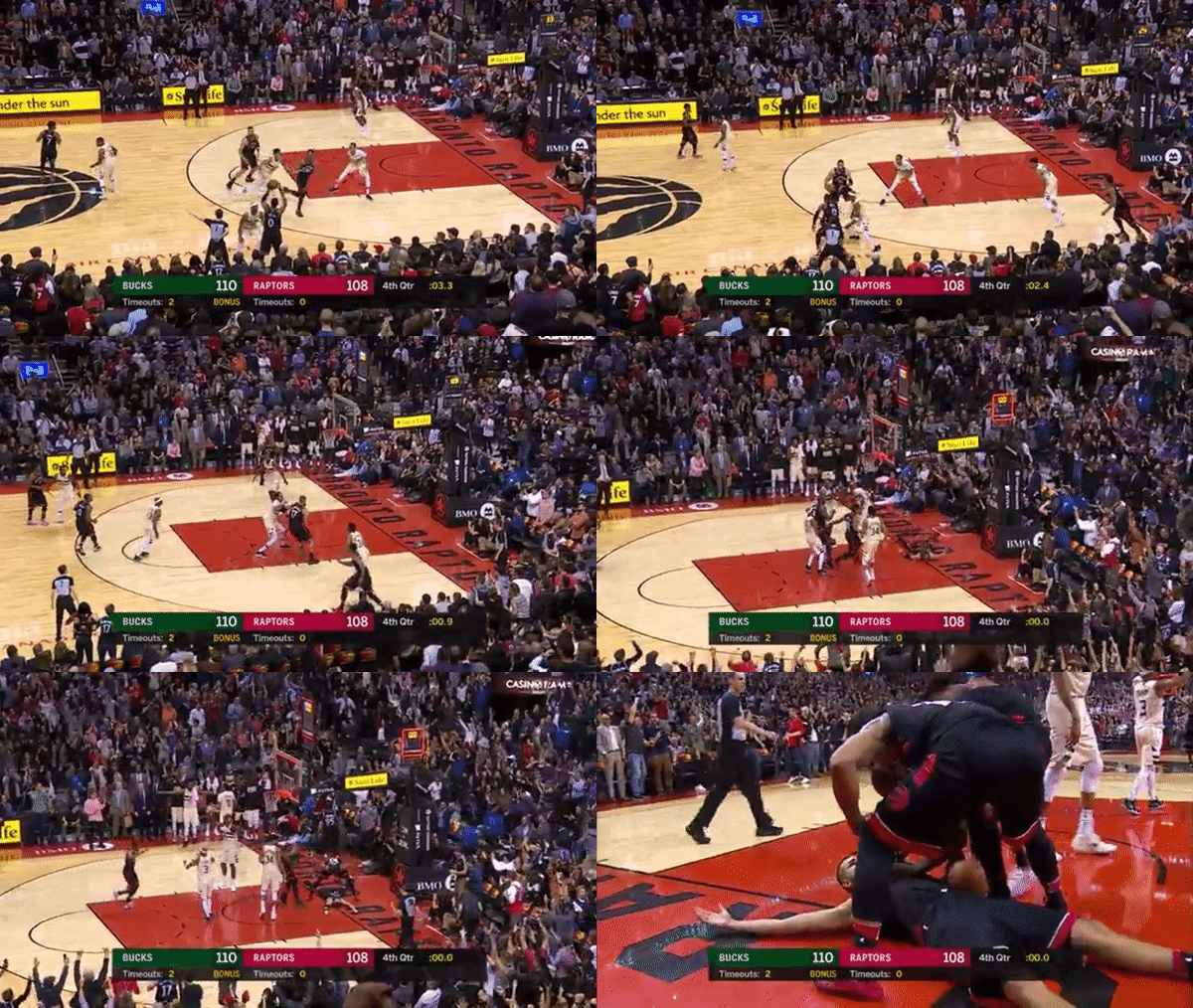
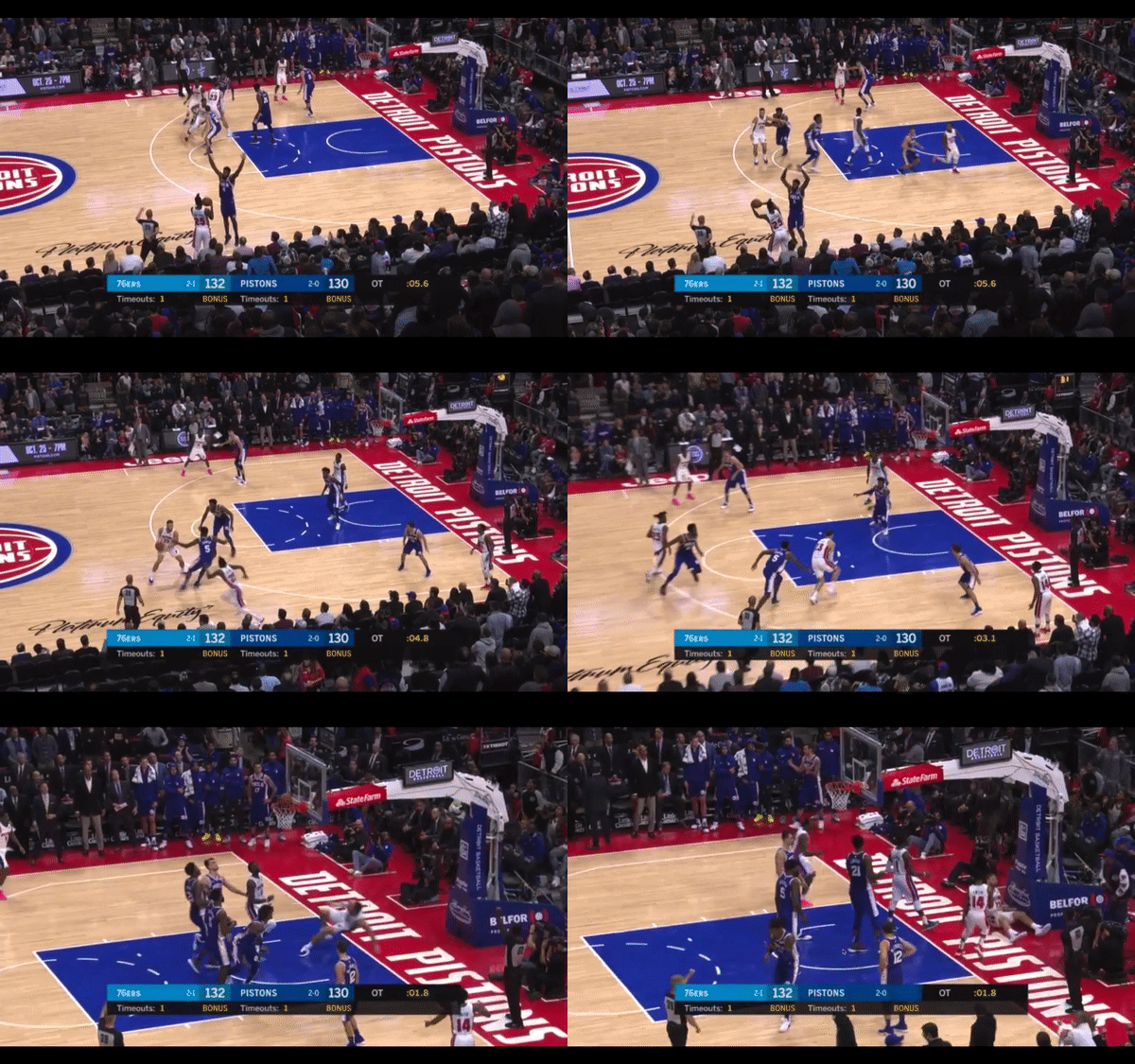
And then, of course, Griffin, who looks to be back to his superstar self for all the reasons stated above and, as a big bonus, looks like a natural fit for one of Casey’s signature out-of-timeout plays.
3. Player development
If there’s one lasting legacy from Casey’s time with the Raptors it would be players like Fred VanVleet, Delon Wright, Pascal Siakam and Norman Powell. Specifically, their development.
Partially because he didn’t have much choice most of the time, Casey gave a lot of opportunity to young players in Toronto, helping speed along their growth into fine NBA players.
The season’s still young, but in Detroit he’s already doing much the same with one unheralded rookie in Bruce Brown Jr.
A 22-year-old shooting guard selected in the second round by Detroit in last June’s draft, Brown is putting up modest numbers, to say the least, but is getting a little bit of opportunity with Luke Kennard out with a shoulder injury.
In 104 minutes played, Brown has shown some value thus far this season as the Pistons have posted a plus-3.6 net rating when he’s been on the court and a minus-1.9 when he’s off. Additionally, his 101.4 defensive rating ranks second only to Glen Robinson of the Detroit players who average 13 or more minutes a night.
Miniscule accomplishments, for sure, but ones that could never come without a coach like Casey who is willing to let young, unproven talent show him what they’ve got.
[relatedlinks]