Few sights are less welcome than, when staring into a mirror, seeing a reminder that more was expected and better was possible.
Without much trouble, one can imagine it’s a sight Andrew Wiggins has, at least at times, caught a glimpse of. Heralded out of high school as Maple Jordan — a can’t-miss prospect whose teenage shoulders were straddled with the weight of both the Minnesota Timberwolves‘ NBA future, and Canada Basketball’s — the Wiggins Experience has been an uneven, if not outright disappointing one so far.
There have been flashes of greatness and stretches of dominance. Wiggins won Rookie of the Year, after all. He’s scored 40 or more points eight times, and 30 or more 37 times. He has been a volcano — a source of awe and angst for onlookers, always able to erupt, but inconsistently doing so.
Amid every hot streak, the regression to the mean — to being an empty calories mid-range scorer with little appetite for passing or defence — has come quick. Which makes taking Wiggins’ career-year so far this season with a healthy dose of skepticism understandable — necessary, even.
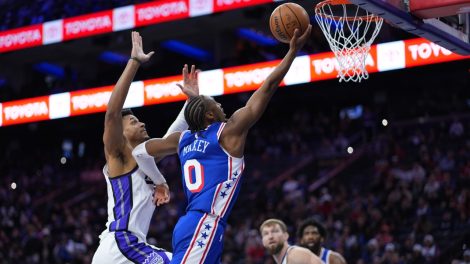
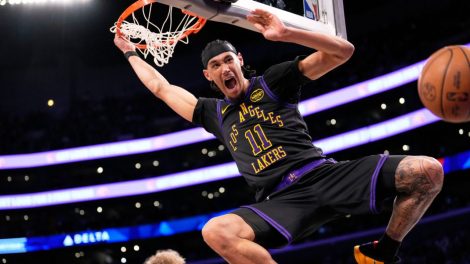
But through 14 games, he has been the player the Timberwolves envisioned when they traded for him back in 2014: A naturally gifted athlete who has matured into a capable facilitator and scorer. If that proves to be the new normal, it changes everything — and not just for Minnesota.
This summer Canada will compete in a must-win Olympic Qualifying Tournament, and with other high-profile Canadian NBA players announcing their intentions to compete, the timing for Wiggins’ emergence into a long-awaited missing piece couldn’t be better for his home country.
While they come with obvious sample-size caveats, reasons to hope that this improvement will be sustainable and carry over to a national team appearance do exist.
Since he joined the Timberwolves, the team has been as organizationally unstable as Wiggins’ on-court play has been inconsistent.
They’ve cycled through four coaches in six years — one of whom was Tom Thibodeau, which proved an unmitigated disaster; they traded for Jimmy Butler to be a more experienced, fully-realized version of Wiggins — which proved to be a divisive disaster.
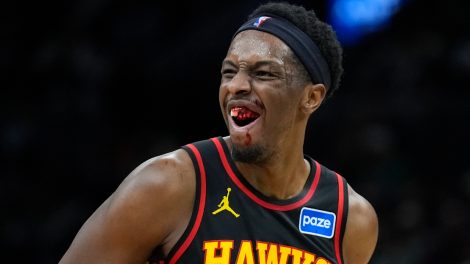
“It’s been tough,” Wiggins told Sports Illustrated’s Chris Mannix of the coaching carousel ahead of last Monday’s game against the Atlanta Hawks. “But nothing in the NBA is easy.”
This season, the disaster-trend appears to have been halted by head coach Ryan Saunders. Saunders got his start with the Timberwolves as an assistant in 2014 — Wiggins’ rookie season — when his father, the late Flip Saunders, was the team’s head coach, and stayed in that role through the short-lived Sam Mitchell experiment and the ill-fated Thibodeau years.
It’s early, but so far his tenure has been marked by an emphasis on stability, building relationships with his players and implementing a modern system that maximizes their strengths. The approach has resonated with Wiggins.
“I went through a lot earlier in my career and everything, he [Saunders] was there to listen to me and help me out,” said Wiggins. “To give me advice. So he got my trust and respect early.”
The on-court results from that stability and relationship have followed.
[snippet id=4725691]
Wiggins is averaging a career-high 25.2 points per night on a career-best 46.9 per cent shooting.
Those numbers stem from a deliberate change in how he has approached basketball. Wiggins is driving to the rim almost 16 times per game this season, double what he did last year, and the emphasis on staying in motion to make the most of his world-class speed has worked.
Nearly eight of the 21 shot attempts he’s averaging have come from within five feet of the rim, up from about five last year, and he’s making them about 68 per cent of the time — two more career-highs. And when there’s no shot available, he’s passed out of the drive successfully almost 30 per cent of the time while turning it over on just four per cent of such occasions.
The next-most common place Wiggins has shot from, though, is perhaps the most shocking: Above-the-break threes, with 5.8 per night. Loosen the parameters to overall threes and it’s 6.7, compared to just 3.4 attempts coming from mid-range.
He’s connecting on them, too. After an early season slump that saw him shoot just 21.7 per cent from three in October, the conversion rate has shot up to 38 per cent in November.
When he isn’t shooting, Wiggins has demonstrated a comfort in being Minnesota’s lead facilitator — so much so that in last Monday’s game against the Hawks, he assumed the nominal starting point guard role. His 16.1 per cent assist percentage is yet another career-high by about six per cent, and has led to 3.4 assists per game.
The improved shot profile and passing numbers speak, in part, to Saunders’ five-out, three-point heavy system. But they also speak to Wiggins’ willingness, after five years of flux, to buy into such a system.
If a players-first coach who fosters relationships and constructs modern schemes is the key to unlocking Wiggins’ on-court potential, one can, without squinting, see how teaming up with Nick Nurse for Canada would yield comparable results.
Whether he competes for Canada or not, though, is a harder question to parse. So far, Wiggins has not given any indication about his Olympic Qualifier plans and, historically, he has shown little interest in being the face of Canadian basketball.
In 2018 he ruled himself out of FIBA World Cup qualifying games that were being held in Toronto and Ottawa, and after initially committing to join Canada in the World Cup this past summer he later withdrew.
Why that’s been the case matters. As the World Cup showed, NBA players opting to spend their off-seasons training instead of competing for their country isn’t altogether uncommon. With multi-million dollar contracts hanging in the balance, the choice is rational — albeit disappointing for fans who want to see their country’s best stand on a podium with medals around their necks.
For Wiggins, though, there have also been rumors that tension between him and Canada’s former coach, Jay Triano, were at the root of his reluctance to play. But as many rumours often are, that one, at this time, remains baseless.
“I have never heard anything concrete about Andrew Wiggins’ relationship with Canada Basketball [being] negative, not one,” Sportsnet’s Michael Grange said during a Wednesday appearance on Sportsnet 590 the FAN’s Good Show. “I’ve talked to Jay Triano, and I’ve talked to Andrew Wiggins, and both of them say there’s nothing to it.
“He [Wiggins] has told me multiple times, he has ambitions to be an Olympian. His mother was an Olympian. I think he holds that closely, and dearly.”
On this team, Wiggins wouldn’t have to be anything resembling the face. Jamal Murray usurped his crown as the highest-paid Canadian in the NBA, RJ Barrett seems more comfortable under the bright lights of being dubbed The Future than Wiggins ever did, cousins Shai Gilgeous-Alexander and Nickeil Alexander-Walker sharing a backcourt together on the world stage is a feel-good story that writes itself.
Instead, Wiggins would get to be what he was always best-suited to be: The ceiling-raising wild card.
Maybe history repeats and by the trade deadline this stretch of play is just another hot streak that tricked those willing to believe in it. Maybe who Wiggins was for the first five years of his career is who he will be for the rest of them. But maybe, just maybe, this time the improvements are here to stay.
And if they are, Wiggins seeing his reflection in a hotel room mirror as Canada chases Olympic Gold in Tokyo is not a future that can be ruled out.
[relatedlinks]