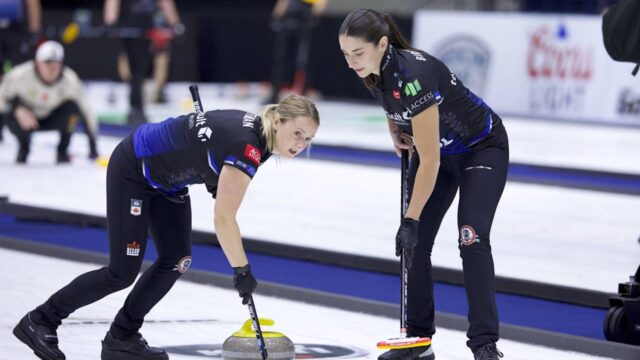
Another week of the Grand Slam of Curling season has been completed in the blink of an eye.
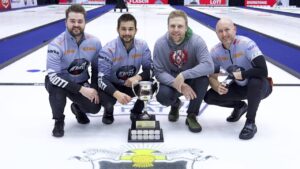
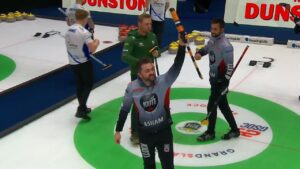
Canada’s Team Matt Dunstone and Sweden’s Team Isabella Wrana earned championships at the P&H Masters in Medicine Hat, Alta., after dominant weeks from both rinks.
If their titles told us anything, it’s that repeating as champions this season on the Grand Slam of Curling tour is going to be hard.
Just ask Canada’s Team Kerri Einarson and Switzerland’s Team Yannick Schwaller. After they won the opening GSOC event, the Co-op Invitational in Victoria, B.C., and looked like the best teams, neither team could even get back to the final at the Masters. Heck, Einarson even missed the playoffs, with a 1-3 record.
There are two reasons for it. First, we’re now well into the season for a lot of teams, which means they're going to start getting into a rhythm — it even felt like from the Invitational to the Masters, the level of play has already raised significantly. Second, 10-15 years ago, watching a Grand Slam event you almost always knew who would be in the final or win the tournament. Now, though, there is more parity among the best teams in the world, leading to the results we’ve seen in the first two Slams.
That’s not all we learned, though. Here are a few things we learned from this week:
Timeclock can go even lower
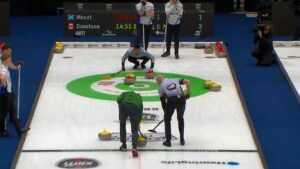
At the beginning of the 2025-26 Slam season, each team was given 33 minutes of thinking time, but we’ve seen that number get lower, basically, for each Slam, including the Masters. At the Invitational, teams had 29 minutes of thinking time, but at the second Slam event of the season, teams were reduced to 28 minutes.
The Curling Group — owners of the Grand Slam of Curling — might have to apply the saying from Chubby Checker’s hit song Limbo Rock, “How low can you go?” into their own thinking because after watching the entire event, it’s clear they can still shave more time off the clock and teams will be fine.
In every game there are multiple points where teams are having longer discussions than needed, causing a delay in between shots, which leads to a bad pace of play for viewers on TV. At the highest, we saw multiple teams take three to four minutes off their time clock for one conversation.
Are there times it’s warranted to have a longer conversation? Of course. But considering teams can burn that much time on one or two decisions like that in a game and still have a couple minutes extra at the end of each match, giving them less time to begin with shouldn’t hurt them.
Ideally, if the amount of thinking time each team had was reduced to 25 minutes, it should help the curlers make decisions quicker, which should increase everyone’s curling IQ, but also should make the product on TV even better.
New points structure seems to work
After the controversy at the Co-op Invitational, where Dunstone and fellow Canadian Team Brendan Bottcher played the eighth end of a 5-4 game to seemingly get to the shootout to each collect a point and reach the playoffs, the Grand Slam of Curling Competition Committee sprung into action.
The committee made a change to the points structure for P&H Masters that seems to benefit the sport moving forward. Every team still gets three points for a regulation win, zero for a loss and teams still get two points for a shootout win.
However, the difference now is teams that would’ve had the hammer in a hypothetical extra end will receive one point if they lose in a shootout, while if the team that wouldn’t have had the hammer loses, they will get zero.
Although it worked great and seemed to have fixed the loophole that was created within the original rules, you just knew one team was going to be screwed by it. That team ended up being Italy’s Stefano Spiller, who was making his GSOC debut. After forcing shootouts against Canada’s Team Brad Jacobs and Scotland’s Team Grant Hardie on the opening two days — two of the world's best teams on the men’s side — the Italians left with zero points.
They lost both shootouts and because they scored in the eighth end to tie the games, they wouldn’t have retained the hammer in the shootout and therefore left with nothing.
Adding a U25 slot by winning was a nice idea but …
Playing on the Grand Slam of Curling stage was quite the learning experience for Canadian teams Peter Hlushak and Grace Lloyd. Both teams won the Saville U25 Challenge to earn their spots at the Masters. The tournament was a part of the new GSOC satellite events series to create avenues for younger teams to reach the Grand Slam of Curling.
While the experience is amazing for these young teams, and will provide them a lot to build off in the future, they essentially provided at least one win for every team on their schedule, as they went a combined 0-8.
It’s not that neither Hlushak's or Lloyd’s teams couldn’t make any shots, but they clearly aren’t anywhere near the level of any team that competes on tour regularly. Sure, the other teams playing them probably loved facing them. But in terms of best product, it might be better for these teams that wouldn’t be at a Slam for any other reason than getting a berth by winning a U25 event to stay playing against the teams of their caliber until they’re good enough to compete with the big timers.
The next stop on the Slam tour is the GSOC National, Nov. 17-22, in Sydney, N.S.

 0:47
 0:44