
Every fantasy sport has its own ins and outs; its own intricacies that the true champions of the game will master in search of an edge.
Baseball, the original fantasy game, has enough numbers to make an economist’s head spin—every pitch delivered in every game is tracked and re-tracked based on expected outcomes, and variables such as stadium, weather, starting pitcher and start time. Each encounter between pitcher and batter has a distinct winner and loser. You can create charts—and charts of those charts. In what other sport could you utter the phrase, “PECOTA says not to worry about his BABIP, it won’t impact his WAR,” and not sound like an utter loon?
Football, the current king of the fantasy realm, is a test of high-stakes survival. The game’s nature puts a premium on immediate reaction. If fantasy baseball is a marathon, then fantasy football is a sprint—to the waiver wire. You will draft, say, 20 players and lose six to eight of them over the course of the season. A solid 50 percent of your free-agent acquisitions will be players who have inherited roles thanks to injuries or benchings. If you are lucky enough to win a fantasy football title—and luck is heavily involved—you might say a prayer for the health of the men who got you there, and perhaps thank your favourite depth chart.
Basketball—the unruly younger cousin of fantasy baseball (with a similar amount of numbers, but less refinement)—is about chasing time. It’s difficult to spend minutes in an NBA lineup and not accumulate meaningful statistics. There are only five players per team on the court at a time, and most fantasy basketball leagues count points, assists, rebounds, steals, blocks and three-pointers. If you’re on the floor and not filling any of those categories, you won’t be on the floor for long. So… who’s starting? Who’s first off the bench? Who has the coach’s favour? Oh—and draft LeBron James. Much like the real NBA, you might compete with a balanced team, but you’ll never win a title without multiple studs.
But hockey… oh, hockey.
Fantasy hockey is a different beast entirely. It’s certainly the least fantasy-friendly of the big four. Long stretches of a hockey game pass without either team scoring—or sometimes even having a great chance to score. And in many pools, points are only awarded to skaters through goals, assists and plus-minus. This lack of consistent statistical opportunity creates a unique situation.
More NHL on Sportsnet:
Subscribe: Rogers GameCentre Live
Rogers Hometown Hockey | Broadcast Schedule
Try to imagine a Sunday in your football league in which your starting quarterback, running back and best receiver all put up zeroes. Imagine a baseball league in which your top three hitters simultaneously go hitless for an entire week. Imagine a first- or second-round pick in your fantasy basketball league suiting up for the game, playing hard—playing well, even—and ending the tilt with zeroes across the sheet.
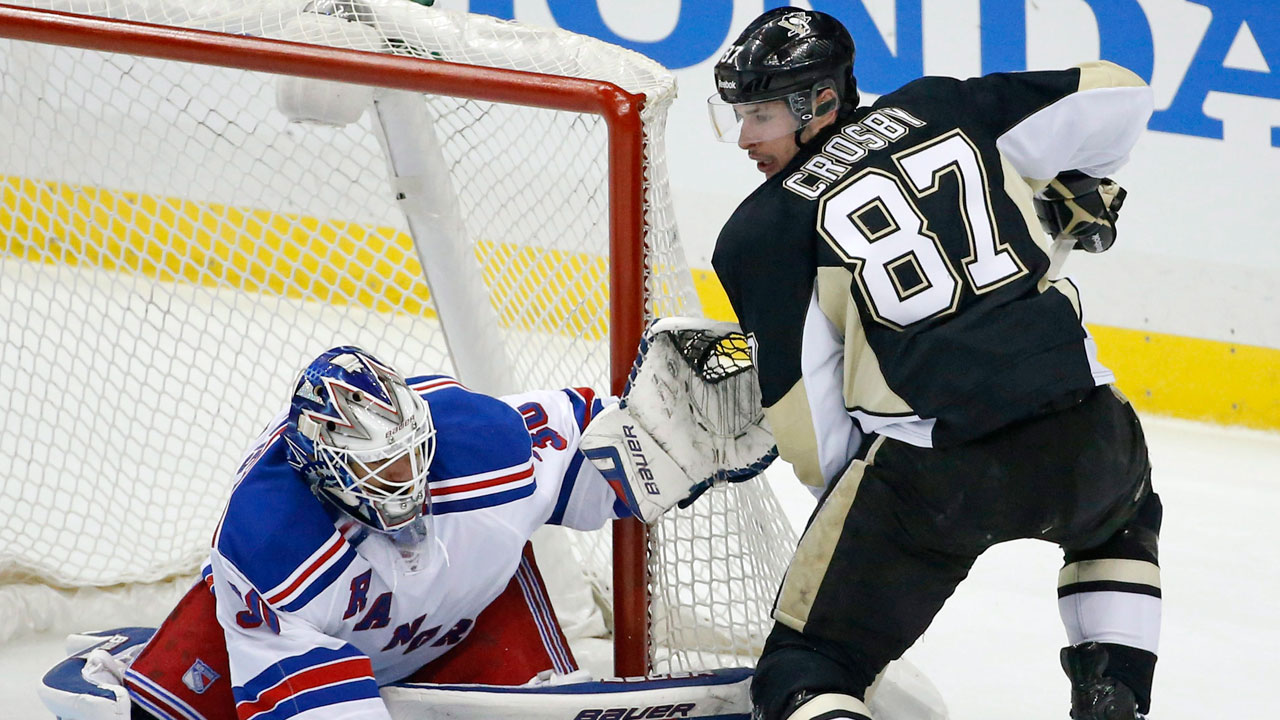
That’ll happen to you in hockey. With some frequency. Sidney Crosby is the consensus No. 1 pick in every draft. Including the playoffs, he played 93 games last year. And went pointless in 26 of them. Almost 30 percent of the time, the No. 1–overall pick gave you nothing. And that’s not a big deal. That 30 percent is less—sometimes far less—than how frequently other superstars went scoreless. This is the truly unique aspect of fantasy hockey. This is what makes it special—it’s more of a crapshoot and more of a challenge than any other fantasy sport. That would seem to demand a totally unique approach. But that’s not quite true.
There are universal fantasy truths. And there are strategies that work for other sports that can be applied to hockey. And occasionally, if you’re lucky enough to be in a league with hockey poolies who don’t play other fantasy sports—or haven’t read this guide—you can use those truths and tactics to find an edge. And finding the edige is really what a winning fantasy-sports strategy is all about. These are those truths:
START THE RUN, DON’T END IT
This basic draft move is a must for every wise GM. If your competitors have been snapping up centres, don’t join in. You’ll be getting the leftovers from their pickings. Take the best goalie or winger out there. If they don’t follow your lead right away—and often they will, placing you in the driver’s seat—do it again. If there’s a position that’s already been picked clean, don’t settle for scraps. You can find replacement-level centres on the waiver wire later, or trade one of your elite players on the wing or in the net for a quality pivot. Act, don’t react.
BACK UP YOUR STUDS
The handcuff is a longtime fantasy football tactic—if you’re spending a first- or second-round pick on a superstar, don’t forget to use a mid- to late-round pick on his backup. It’s not as universally applicable in hockey, because many superstars don’t have clear second bananas behind them ready for action, but you can use recent history as a guide. Goalies, of course, are a must. If you’ve got Tuukka Rask, go get Chad Johnson, too—if your roster allows space for it, any No. 1 goalie on a team that projects to finish with more than 95 points or so is worth backing up. But the strategy can also work for forwards. Andrew Shaw is no world-beater, but his 39-point pace increased to a 59-point pace as Kane and Toews struggled with injuries in last season’s final month. It shouldn’t surprise you to know that Gustav Nyquist’s ridiculous scoring run coincided with the absence of Pavel Datsyuk and Henrik Zetterberg, then dropped off as the Red Wings’ senior stars returned to the lineup. If there’s a young player with some talent behind one of your big guns, and you have room on your bench, it’s better to stash now than cry later.
GET THE CHEAPEST COGS IN THE BEST MACHINES
If all third-tier players are created more or less equally, then circumstances should define your approach. Even a crappy hitter is going to see strikes and also score runs in a potent offence (tip your hat to the top of the Detroit Tigers’ lineup). Even a replacement-level running back is going to produce in a record-setting NFL offence (in case you wondered how Knowshon Moreno put up 1,200 yards and 10 touchdowns for the Broncos and then found himself looking for a job two months later). In fantasy hockey, a competent possession player who hits the ice with highly skilled scoring studs is worth owning, even if you’re not buying into his offensive talent—it’s the reason, say, Benoit Pouliot makes a fine late-round pick now that he’s moved from stingy New York to freewheeling Edmonton. When you’re looking for difference-makers late in your draft, it’s always smart to take a chance on players whose situations make them more valuable.
USE THE NUMBERS YOUR LEAGUE DOESN’T COUNT
This one comes directly from the baseball stat-nerd playbook. Sabermetricians may bemoan the fact that fantasy baseball still uses such Bronze Age numbers as batting average and RBI to award trophies—but they manage to take the numbers they consider more indicative of true ability and apply them to find fantasy value. In baseball, a hitter’s batting average on balls in play (the aforementioned BABIP) can tell you if simple bad luck is to blame for a dip in his numbers, or the reverse, if you suspect he’s overachieving.
Hockey analytics are at least a decade behind baseball’s, but there’s a ton of fantasy knowledge to be gleaned from what too many fans still dismiss as #fancystats. Even if your league doesn’t count Corsi (oh for one that does!), you can use those numbers to win. This book contains a detailed article on how to do just that (P. 12). Because even if you hate analytics, you can at least remember this: When trying to decide whether a player’s year, good or bad, was a fluke, quickly look at his shooting percentage and compare it to his career average. Simple, right?
MINUTES STILL MATTER
In the same way any player getting serious floor time in the NBA is primed to put up numbers, hockey players who are heavily used on special teams will have more opportunities. This holds especially true for defencemen—who are obviously far more likely to put up points when they spend a decent amount of ice time with the man advantage. Being part of the main power-play unit is obviously crucial to fantasy success—but any sort of special-teams time can help, even penalty killing. For one thing, players—again, especially defencemen—entrusted with the PK are often the coach’s go-to guys. For another, they can’t accumulate minuses while they’re killing penalties—only pluses—and with only four men on the ice, there’s an even better chance that, if a shorthanded goal is scored (which last year happened once for every 42 power plays, or every 12 games or so), they’ll be in on it. Also, many leagues award bonuses for special-teams points, making them even more critical. This doesn’t matter so much when choosing between the likes of John Tavares and Ryan Getzlaf, but if you’re making the call between, say, Mark Streit (44 points, with 221 minutes on the PP and just 29 minutes on the PK) and Oliver Ekman-Larsson (also 44 points, but with 327 PP minutes and 229 on the PK), it might help you determine who will have the best chance to improve his numbers.
DON’T SCARE EASILY
Perhaps the most universal fantasy advice. If you’re going to win a league, you’re not going to draft a perfect team and then coast through the year. At some point you’ll have to make a bold call: reaching for a player you like in the draft; dropping an underperforming stud; pulling the trigger on a trade that could backfire; benching a proven scorer gone cold in favour of a hot rookie. There are no statistics that can tell you how many fantasy GMs have backed into a title while standing pat and playing it safe all year, but anyone who’s played for years would estimate the number, charitably, to be low. Go big or go home.