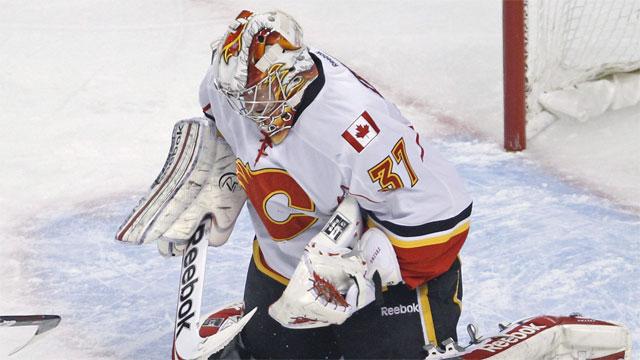

Now less than ten days until the current CBA expires between the National Hockey League and the Player’s Association, thousands of players are awaiting the fate of the 2012-13 season. Among those, American Hockey League players including the Calgary Flames affiliate team: the British Columbia based Abbotsford Heat.
Should there be a lockout, players with two-way contracts can be assigned from the Flames organization to play with the Heat and entry-level players can either choose to play junior hockey until the season begins or play in the AHL. That covers most of the younger players who could likely use time to consistently work and better their skills. The remaining lads can choose to go play hockey in Europe or simply take time off; it’s really up to them.
So, how does that fare for the culture of a team like the Heat, who last season alone saw upwards of 15 players play in the ‘Bigs’ on the Flames lineup after a slew of injuries claimed key members?
Ryan Pinder, the Heat play-by-play host, says while the lineup will likely see a shake-up if the NHL season is stifled, the culture within the Abbotsford association will pick up right where it left off.
Abbotsford lost the Conference Semi-Finals series 4-1 to the Toronto Marlies in the spring and though they didn’t advance further on the road to the Calder Cup, Pinder says, a lot of positives can be taken from last season.
“We set a ton of benchmarks for the franchise in terms of the history of the club. There were 15 to 20 different records set including number of wins in a season, high numbers in goals, points, assists, first NHL goals, first AHL goals, so a lot of stuff like that. “
Records were set thanks in part to the commitment and trust among the players who Pinder says, are a close team. Despite a 12-year gap between the youngest and oldest members on the roster, a byproduct of the amount of travel the Heat do is the tight knit culture inside their dressing room. Thirty-eight home games beginning Oct. 12 is mirrored by 38 away games, but when the season is said and done, Abbotsford spends about 115 days on the road, primarily travelling to central and eastern North America.
“When we go to play a road game, it’s never less than five days, ever, so when you’re on the road, you’re always with the group, your teammates. Coaches always say early on the season that it’s good to get on the road because the guys get a chance to bond and the Heat are an extreme example of that.”
Amid the two-way contracts and constant line-up shuffles last season with the Heat, Pinder says the mood among players remains the same.
“When guys go up and come down its always back slaps and high-fives. There’s no jealously and of course, from a Heat perspective it’s tough to see guys go up because it affects our line-up but they’ve got goals to reach too,” he says.
A big part of the team culture is also head coach Troy Ward, someone who is very trusted by Flames general manager Jay Feaster. According to Pinder, Ward starts his day at the rink sometimes four hours prior to the arrival of players, working on his strategies and systems, something will likely continue pending a lockout in the AHL in the coming weeks.
“The same philosophies will be intact but it’s going to be a lot of newer faces and Troy’s gift is finding a way to try and relate to all of those players and really get the most out of them and that’s a whole new set of challenges because there’ll be five to 10 new guys on the roster this year.”
It remains unclear as to who’s going to be eligible to play in the American Hockey League, let alone if there will be an NHL season, but once a decision is made September 15, the situation will become clear.