
Rising UFC star Rory MacDonald is a nice, quiet kid. But it’s the quiet ones you have to worry about.
‟Rory! Rory!! Rory!!!”
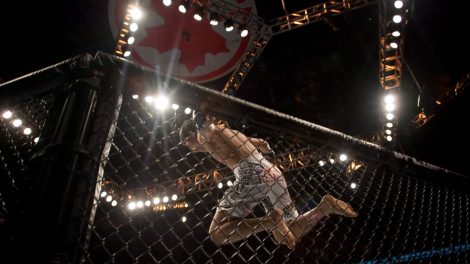
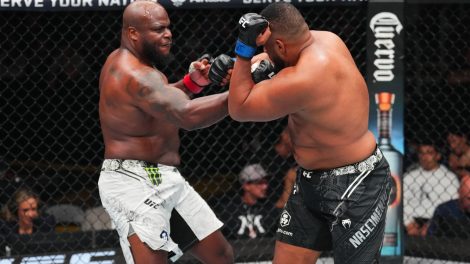
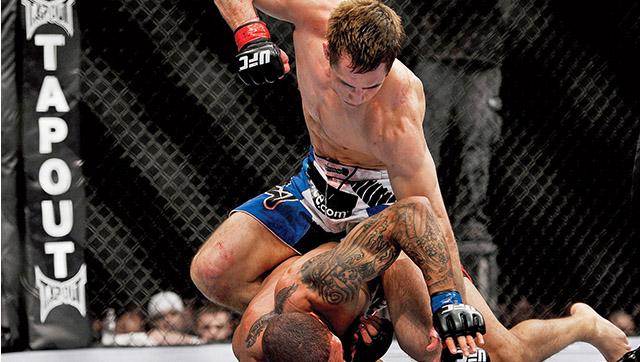
The chants rain down on the local kid as the final round gets under way. It’s June 2010, and Rory MacDonald, in the white trunks and, at 20 years old, the youngest fighter in the UFC, ignores the trail of blood running down from his swollen nose, touches gloves with long-time WEC welterweight champ Carlos Condit, and picks up from where he left off in the two previous rounds. He blocks Condit’s first kick as if his forearms are pads, and catches his opponent’s foot on the second like a grown man toying with a child. Condit loses his balance and backpedals toward the cage, where he’s met by a flying knee from the Quesnel, B.C., native. MacDonald reels off a flurry of strikes as he chases his more experienced opponent around the octagon. He smells victory. His adrenalin is pumping like never before—and it shows. His cornerman, David Lea, barks a command. Normally, Lea says, working MacDonald’s corner is like playing a video game—push X and Rory puts his opponent on his back; Y is an elbow to the skull. But the sellout crowd packed inside Vancouver’s GM Place is so loud, the two can hardly hear each other between rounds. Even when they can, MacDonald isn’t listening. It’s just his second fight in the world’s biggest promotion and for a kid who grew up watching MMA, proudly on the UFC bandwagon before it even had wheels, it’s overwhelming. “Too much too soon,” MacDonald would later admit. “All I saw was red.” Sensing defeat, Condit steps forward and launches a burst of last-gasp punches. A clean shot connects with MacDonald’s orbital bone. The wound opens instantly and with seven seconds left on the clock, the referee stops the fight.
Some athletes spend their lives trying to figure out what went wrong after a big loss. MacDonald knows exactly what happened: “Losing that fight,” he explains now, “changed my mindset. It opened my eyes that I couldn’t be a fan of the guys I was fighting anymore.”
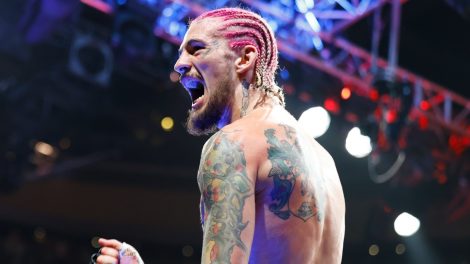
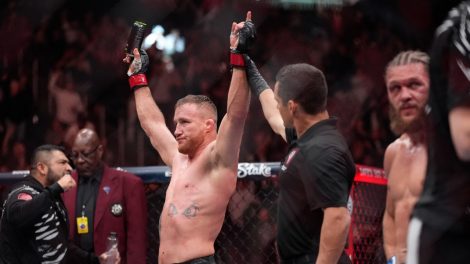
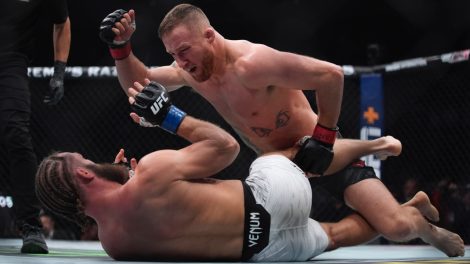
The Condit fight remains MacDonald’s only loss. He’s gone on to prove to himself and the MMA world that he deserves to be on this stage, registering four convincing wins since, building a fierce reputation and a 14-1 pro record. At 24, he’s already considered one of the most dangerous men in a sport filled exclusively with dangerous men. The future of the UFC. The cream of the first generation of fighter trained specifically for MMA—specialist at nothing, master of everything, a complete mixed martial artist. And with a fight against Jake Ellenberger scheduled for July 27, he’s out to further impose himself on a stacked welterweight division—and maybe even earn a title shot. In person, away from the octagon at the expanse of Astroturf and exposed brick of the Adrenaline Performance Center gym in Montreal, MacDonald doesn’t exactly live up to his reputation, one that strikes fear in sparring partners who loathe seeing their name next to his on the gym’s white board. Calculating, cold-blooded and brutally violent in the cage, those around the sport joke MacDonald should be wheeled out like Hannibal Lecter. Maybe it’s the eerily vacant stare he wears right before a fight. But while his eyes are black holes in the octagon, away from it there’s something about them that’s almost sheepish or apologetic. He’s unexpectedly courteous and well-mannered, soft-spoken. “Hey, nice to meet you. I’m Rory,” he introduces himself with a handshake before joining UFC bantamweight Yves Jabouin and Bellator standout Nordine Taleb to stretch. “People think he’s this emotionless, serial killer–type—no feelings,” explains Lea, who calls MacDonald the most misunderstood man in the sport. “He’s got a great sense of humour, laid-back, very personable. But he is an introverted guy. He’s not in this to be famous, and that seems to bother people.”
MacDonald doesn’t hype himself up, talk trash, or play into stereotypes (lately he’s taken flak because his haircut isn’t the stock MMA buzz cut), fitting neither the mould of brute nor that of flashy fight star. But he isn’t consciously rebelling against UFC stardom either; it’s as though it simply never occurred to him to be less than 100 percent genuine. “I’m not a fake fighter. I’m not here for fans or to get on TV. I’m here to fight,’ MacDonald says. “Fighting makes me happy. Some people would be afraid to be locked in a cage with a big muscular dude trying to rip your head off. But that’s where I’m comfortable.”
Fighting had been a part of MacDonald’s life long before he first walked into David Lea’s mixed martial arts gym, Toshido, in Kelowna, B.C. Though up to that point, the lanky teen’s brawls took place on the schoolyard. “He was just a loner, a real quiet kid who got picked on,” Lea recalls. “And when he got picked on, he wouldn’t shy away from it.” He adopted technique faster than any fighter Lea had ever seen, and quickly established himself as Toshido’s prized pupil. “I was like the gatekeeper,” MacDonald says with a laugh. “If any big guys came in with a bad attitude, I would beat them up,” he recalls. “Talk about a humbling experience for some juiced-up street-fighter guy,” Lea says. “Getting punked by some skinny 14-year-old who can’t even shave.”
The sport became MacDonald’s life. By 16, with his mother living on the coast and his father taking a job out of the city, MacDonald lived alone, his world comprised of school and the gym—little else. He would frequent the Leas’ house for dinner, leaning on his trainer as a father figure. “I listened to a lot of what Mike Tyson said about his trainer Cus D’Amato. He completely trusted him and did exactly what he said,” MacDonald says. “So I did whatever Dave told me to do. He really took care of me when I needed him most.”
Lea also gave MacDonald his shot. Only two promotions in Western Canada would allow a high school kid to fight pro. And though Lea knew putting a 16-year-old—one who had never been to a pro fight before—in the cage was an unpopular decision that could have led to “disastrous” results, just two minutes, 11 seconds, and one rear-naked choke later, the fight was over. MacDonald was a natural. In the months that followed, Lea helped hone MacDonald’s raw talent for focused violence to a near-lethal edge, and, under his tutelage, MacDonald built his skill set and scrawny frame. Through two years and five fights, he remained undefeated, culminating in winning the national King of the Cage title in 2007. But then, at 18, he walked away from it all.
He had been miserable in training leading up to that title fight, and distracted (“Typical high school stuff—girls,” he says). He questioned whether or not fighting was what he wanted to do with his life. He moved in with his mother, and worked the “f—kin’ miserable 9–5 stretch” as a framer. But after just three months, he returned to Kelowna and tracked down Lea. “I want to be in the UFC,” he told his coach.
Now, nearly three years after his UFC debut, MacDonald is a world away from Kelowna. He moved to Montreal immediately after the Condit loss, leaving his long-time trainer behind (the two are still “best friends”) to join Tristar Gym, home of welterweight king Georges St-Pierre. “They saw what he was capable of and wanted to keep him close,” says Lea, adding that while it was tough, the move was the right one for everyone and established MacDonald as heir apparent. “As a sparring partner, he’s going to make Georges better, and when Georges moves on, you have a superstar waiting in the wings.” In fact, some say MacDonald, the UFC’s fourth-ranked welterweight heading into his next fight, is already good enough to challenge for GSP’s title. But the friends are on record saying they’ll never go to war.
At APC, under the hum of the fluorescent lights, MacDonald quietly steps off a treadmill, rubs a towel across the cauliflowered ears he wears as a badge, and stutter-steps around a photographer who he’s been politely trying to ignore all morning. He takes a swig from a water fountain and begins shadow-kneeing an imaginary target. “When you’re hitting somebody,” he says, in the matter-of-fact tone one might use when reading aloud instructions to assemble a shelf, “you want to picture your fist going through their skull. You want to hit them so that your fist breaks their face. It’s about imagination.”
Five months ago, MacDonald was waiting to apply that, um, technique to Condit’s skull, before a neck injury forced him out of the rematch he coveted—so much so that insiders say MacDonald would risk his ranking to move down and fight Condit, who has since slipped down the welterweight ladder. MacDonald says no. He’s moved on. In Ellenberger, MacDonald has a new target for his fist to smash apart. And there’ll be another. And another. And the quiet kid from B.C. will be happy to do it.
This story originally appeared in Sportsnet magazine. Subscribe here.