Goalie interference can be a controversial topic for hockey watchers who try to understand why some goals are overturned, while others are allowed.
This season, we'll provide a running tracker of goalie interference plays and challenges to see how the NHL is ruling on each play and help show you the standard that is followed in 2025-26.
We will show the most recent challenge at the top.
Overall coach's challenge record: 12-27
* denotes coach's challenge
*Thursday, Dec. 18: Pittsburgh at Ottawa
The situation: Midway through the second period Ottawa holds a 3-0 lead. There's a face-off in the Senators' zone, which is won by Pittsburgh back to the point. Kris Letang takes a quick shot on Ottawa's net and scores on the play. However, Rickard Rakell, who's trying to get to the front of the net, makes contact with Senators goalie Linus Ullmark and knocks him to the ice as the puck arrives. The play is immediately waved off as "no goal" by the referee in front. Pittsburgh challenges the call.
The ruling: The call on the ice is confirmed and there is no goal on the play. Pittsburgh is given a two-minute minor for the failed challenge.
Via the NHL: "Video review confirmed Rickard Rakell impaired Linus Ullmark’s ability to play his position in the crease. According to Rule 38.11, 'The standard for overturning the call in the event of a “GOAL” call on the ice is that the NHL Situation Room, after reviewing any and all replays and consulting with the On-Ice Official(s), determines that the goal should have been disallowed due to “Interference on the Goalkeeper,” as described in Rules 69.1, 69.3 and 69.4.'"
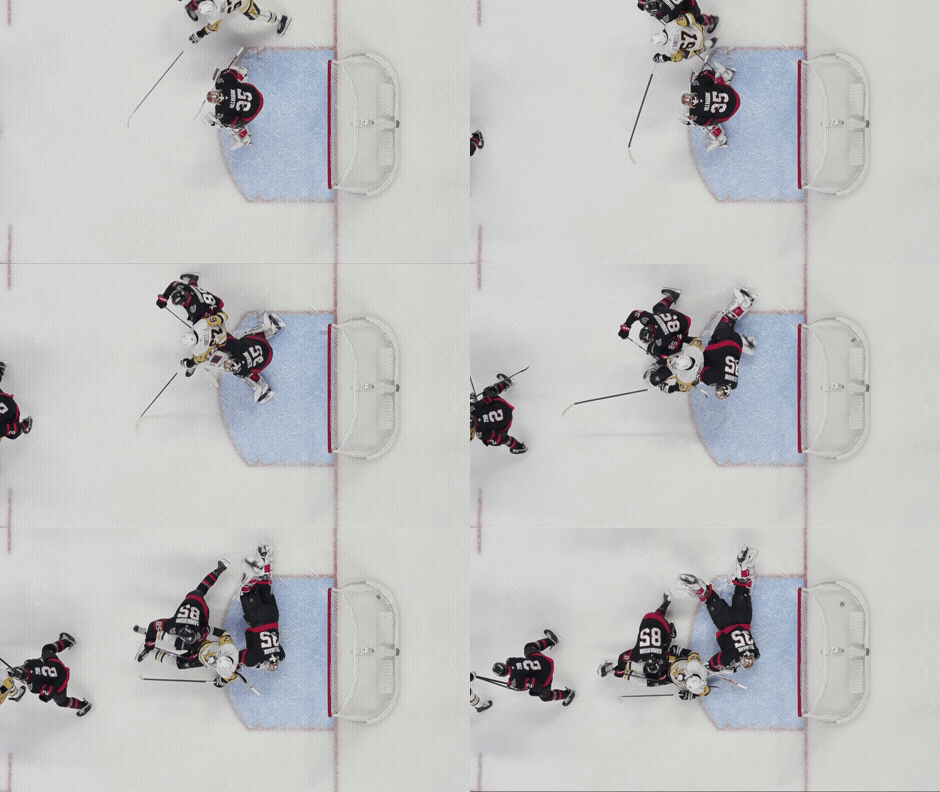
The result: The game remained 3-0 Ottawa, who failed to score on the ensuing man advantage. The Senators went on to win the game 4-0.
*Thursday, Dec. 18: Chicago at Montreal
The situation: Early in the first period of a 0-0 tie, Chicago has the puck in Montreal's end and it comes to defenceman Alex Vlasic at the point, who takes a slap shot on net. As he shoots, Chicago's Ilya Mikheyev and Montreal's Noah Dobson battle in front of goalie Jakub Dobes and the Canadiens goaltender falls over after making contact with Mikheyev's leg as he tries to move to his left. Montreal challenged the play for goalie interference.
The ruling: After a very quick review, the call on the ice was overruled and the game remained 0-0.
Via the NHL: "Video review determined Chicago’s Ilya Mikheyev impaired Jakub Dobes’s ability to play his position in the crease prior to Alex Vlasic’s goal. The decision was made in accordance with Rule 69.1 which states, in part, 'Goals should be disallowed only if: (1) an attacking player, either by his positioning or by contact, impairs the goalkeeper’s ability to move freely within his crease or defend his goal.'”
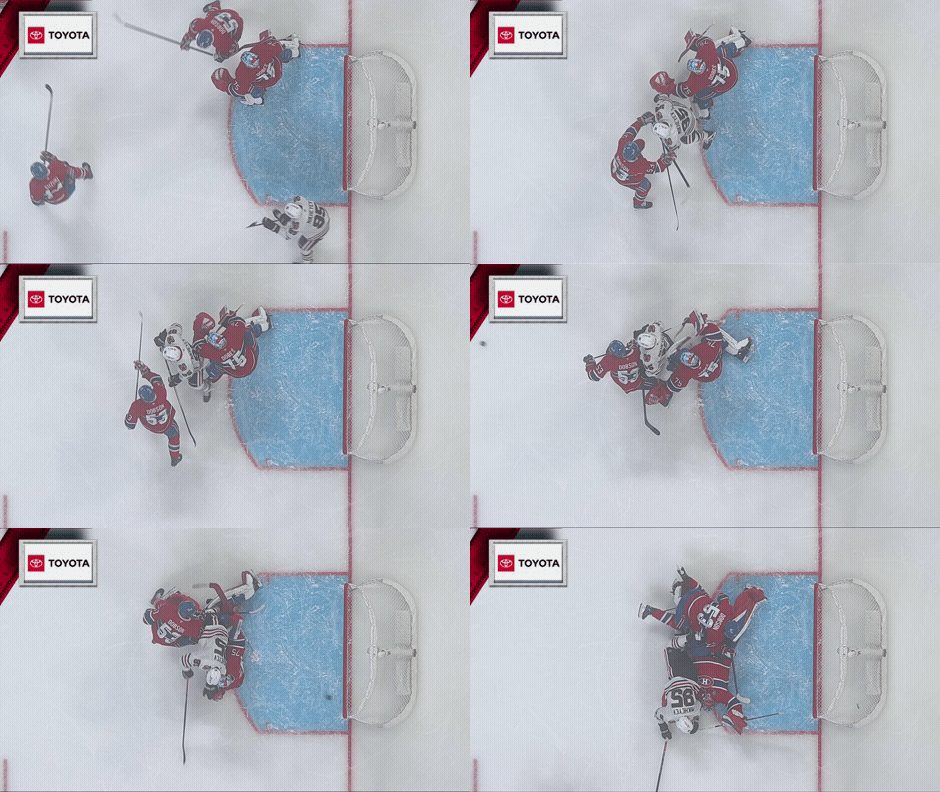
The result: While this Chicago goal was taken off the board, they opened the scoring about three minutes later anyway. Montreal, however, went on to win the game 4-1.
*Tuesday, Dec. 16: Chicago at Toronto
The situation: Midway through the first period, the Blackhawks have a 1-0 lead and win a face-off in the offensive zone. From behind the net, Ilya Mikheyev makes a power move to the front and the ensuing loose puck creates havoc in front as players from both teams crash the crease. After a couple jabs at the puck, Joseph Woll appears to cover it, but Jason Dickinson takes a stab at the puck and it ends up in the back of the net. The call on the ice is a goal that gives Chicago a 2-0 lead, but the Leafs challenge for goalie interference.
The ruling: After review, the call on the ice is overturned and the Hawks' lead remained at 1-0.
Via the NHL: "Video review determined that Chicago’s Jason Dickinson interfered with Joseph Woll by pushing his pad, which caused the puck to enter the net. The decision was made in accordance of Rule 69.7, which states in part, 'In the event that a goalkeeper has been pushed into the net together with the puck by an attacking player after making a stop, the goal will be disallowed.'"
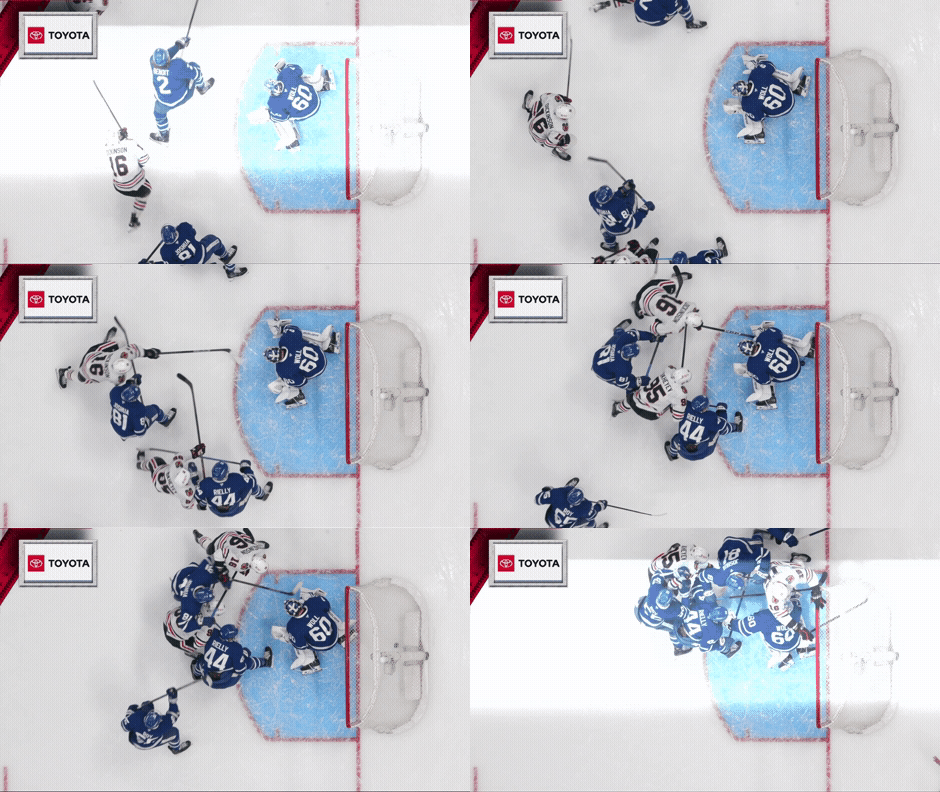
The result: A few minutes after this play, Jason Dickinson scores anyway, a shorthanded marker to give the Blackhawks the 2-0 lead. It wasn't until the third that Toronto stormed back, scoring three unanswered goals and winning the game 3-2.
*Monday, Dec. 15: Florida at Tampa Bay
The situation: Early in the first period with the Panthers leading 4-1, the Lightning break into the offensive zone. Defenceman JJ Moser receives a cross-ice pass as he steams into the zone and beats Sergei Bobrovsky with a shot from the left face-off dot. But, as the play moves to Florida's net, Jake Guentzel sets up in front of Bobrovsky, getting right on top of him for a screen without any contact from a Panthers defenceman. Florida decided to challenge the play for goalie interference.
The ruling: Guentzel remained out of the crease on the play so the call on the ice was upheld and Tampa Bay cut Florida's lead to 4-2.
Via the NHL: "After video review, it was determined that the contact between Tampa Bay’s Jake Guentzel and Florida’s Sergei Bobrovsky occurred in the white ice and did not constitute goaltender interference."
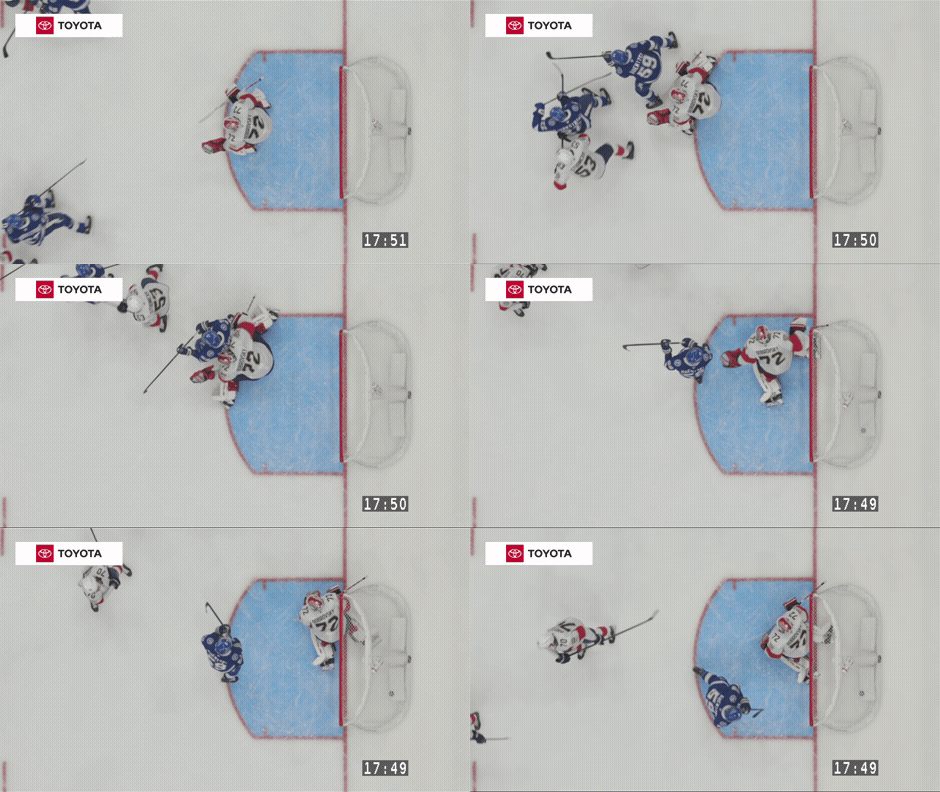
The result: The Panthers headed to the penalty kill after the failed challenge, but the Lightning could not convert on their power play. Florida added another insurance marker shortly after and went on to win the game 5-2.
*Sunday, Dec. 14: Utah at Pittsburgh
The situation: A few minutes into the third period with the Penguins holding a 3-2 lead, the Mammoth have the puck in the offensive zone and Sean Durzi gets an open shot from the circle and puts it in the net. But as the puck arrives at the net, Utah's Kevin Stenlund and Pittsburgh's Ryan Graves are battling for position in front. The Penguins decided to challenge the play for goalie interference, believing Stenlund made contact with goalie Sergei Murashov while spinning off the check.
The ruling: After a quick review, the call on the ice stands and Utah ties the game 3-3.
Via the NHL: "Video review confirmed no goaltender interference infractions occurred prior to Sean Durzi’s goal."
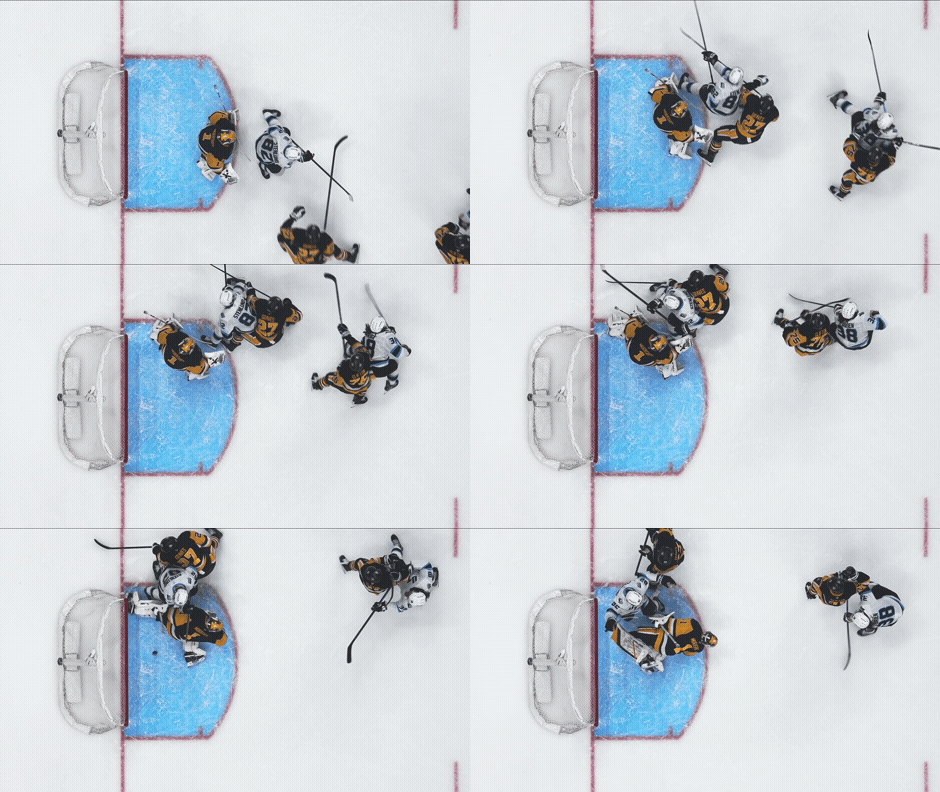
The result: Durzi's goal completed Utah's comeback from a 3-0 deficit and Pittsburgh's failed challenge meant the Mammoth went on the power play. Utah scored on the man advantage to take a 4-3 lead, becoming the fifth time this season a team scored on the power play following a failed coach's challenge for goalie interference. Utah would give up the lead a few minutes later, but went on to win the game in OT, 5-4.
*Friday, Dec. 12: Seattle at Utah
The situation: A little over halfway through the second period in a 1-1 game, the Mammoth take the puck into Seattle's zone on the rush and get multiple chances on net. A rebound kicks out to Kailer Yamamoto, who buries it in the net, but the goal is immediately waved off by the referee for goalie interference as Liam O'Brien appeared to make contact with Philipp Grubauer while crashing the crease. Utah challenges the call.
The ruling: After a quick review, the call on the ice was overturned and Utah's goal counts to give them a 2-1 lead.
Via the NHL: "After video review, it was determined that the contact between Utah’s Liam O'Brien and Seattle’s Philipp Grubauer occurred in the white ice and did not constitute goaltender interference."

The result: Utah would take its 2-1 lead into the second intermission, relinquish it in the third, then get it back again and went on to a 5-3 victory.
*Thursday, Dec. 4: Colorado at NY Islanders
The situation: Midway through the first period in a 0-0 game, the Islanders have control of the puck in Colorado's zone. It makes its way to the point, where Ryan Pulock blasts a slap shot on net that is stopped by Avalanche goalie Mackenzie Blackwood. A scrum ensues with several Avalanche and Islanders players swarming the crease. The puck eventually comes free and Kyle MacLean puts it in the net. The call on the ice is that it's a goal and the Islanders take a 1-0 lead. But the Avalanche challenge for goalie interference.
The ruling: After a lengthy review, the call on the ice is upheld and the goal is confirmed. The Islanders took a 1-0 lead on the play.
Via the NHL: "Video review supported the Referees’ call on the ice that the incidental contact on Colorado goaltender Mackenzie Blackwood occurred as New York players were making a play on a loose puck and, therefore, it did not constitute goaltender interference. According to Rule 69.7, 'In a rebound situation, or where a goalkeeper and attacking player(s) are simultaneously attempting to play a loose puck, whether inside or outside the crease, incidental contact with the goalkeeper will be permitted, and any goal that is scored as a result thereof will be allowed.'"
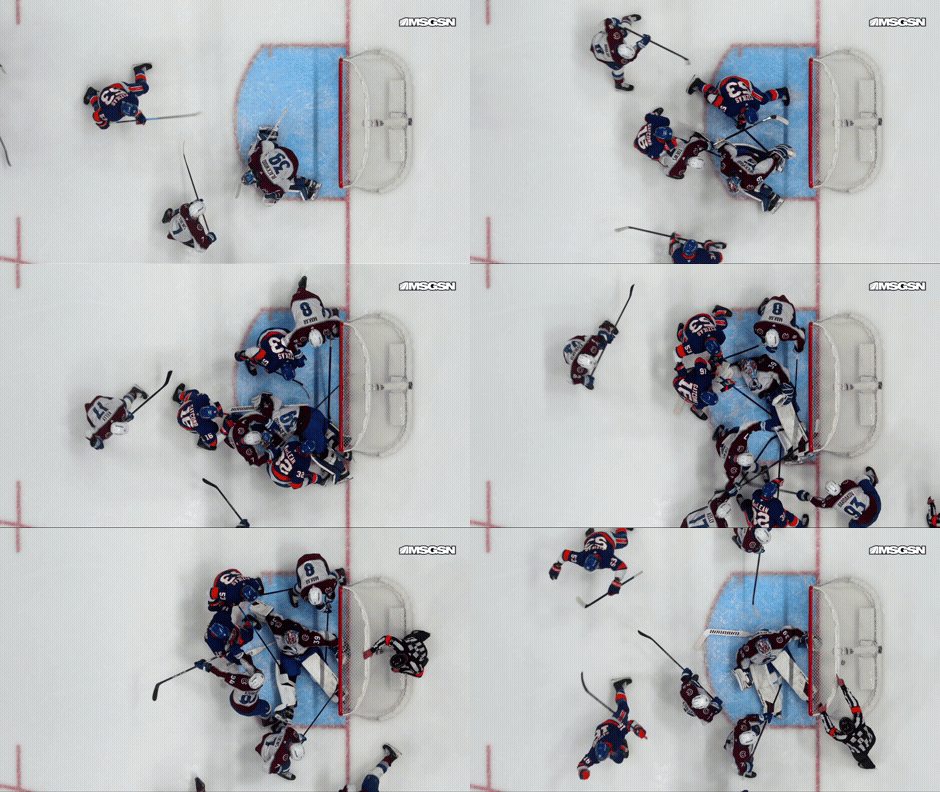
The result: The Avalanche were given a two-minute penalty for the failed challenge, but the Islanders did not score on the power play. New York went on to win the game 6-3. After the game, Colorado head coach Jared Bednar had some sharp criticism on the state of goalie interference in the league.
"I think goalie interference is a joke," Bednar stated. "If (that's) not goalie interference I don't know what is. You can't just shove the goalie's pads out of the way and create a loose puck. I'm getting them all wrong when I'm looking at challenges around the league. I'm not going to challenge unless it's obvious, but to me that's obvious."
Bednar has made two goalie interference challenges so far this season (on one goal for the Avs and one against) and is 0-2.
*Wednesday, Dec. 3: Washington at San Jose
The situation: In the last half of the third period the Capitals held a 7-0 lead, but San Jose was on the power play. Dmitri Orlov got the puck at the point and wired a slap shot on net that beat Washington goalie Charlie Lindgren to break the shutout. But as Orlov's shot arrives at the net, San Jose's Pavol Regenda moves in front to screen Lindgren and, without any interference from a defender, he backs into the Capitals netminder. Washington challenges for goalie interference.
The ruling: The contact with Lindgren appears to happen after the puck has gone in and the ruling on the ice stands.
Via the NHL: "Video review confirmed no goaltender interference infractions occurred prior to Pavol Regenda’s goal."
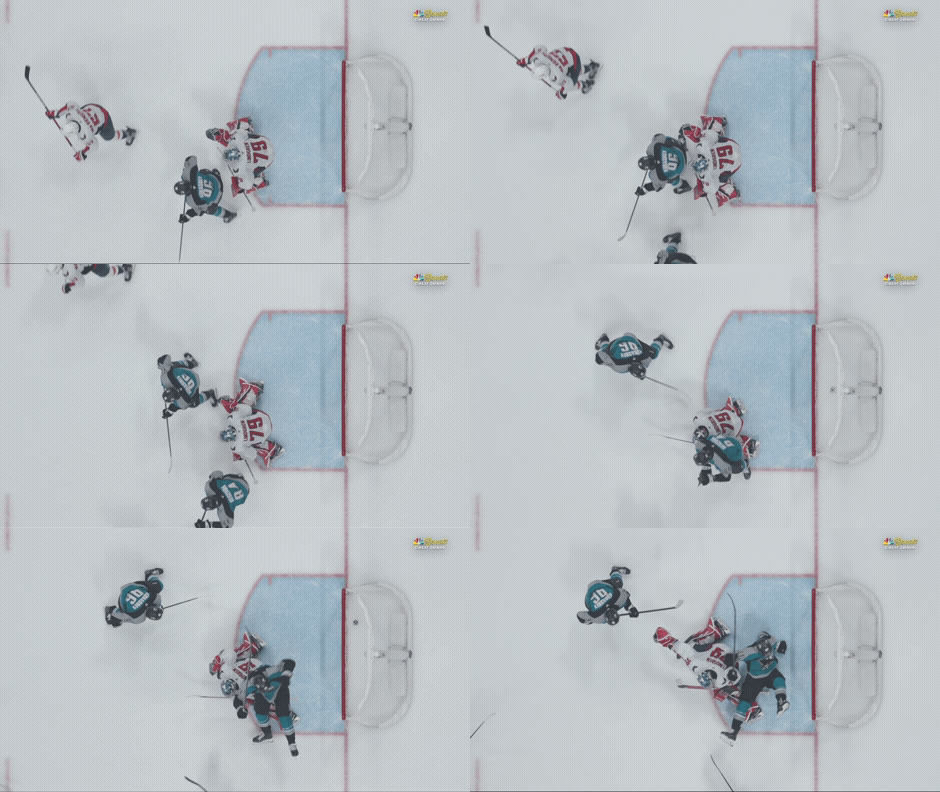
The result: With the shutout broken, Washington heads to the PK after the failed challenge. However, they killed it off and went on to win the game 7-1.
*Wednesday, Dec. 3: Washington at San Jose
The situation: Midway through the first period with the Capitals ahead 1-0, they win an offensive zone draw and work around the zone. Washington gets the puck down low, and there's havoc around San Jose's crease as two Capitals players crash the crease and several Sharks players desperately try to defend the slot. Sonny Milano scores, but it appears Hendrix Lapierre makes contact with Sharks goalie Yaroslav Askarov in the crease. San Jose challenges the play for goalie interference.
The ruling: After review, while the contact Lapierre and Askarov was recognized, it was decided it did not impede the goalie from stopping the shot.
Via the NHL: "Video review confirmed the Referees’ call on the ice that the incidental contact between Washinton’s Hendrix Lapierre and San Jose goaltender Yaroslav Askarov did not impair Askarov’s ability to play his position in the crease."
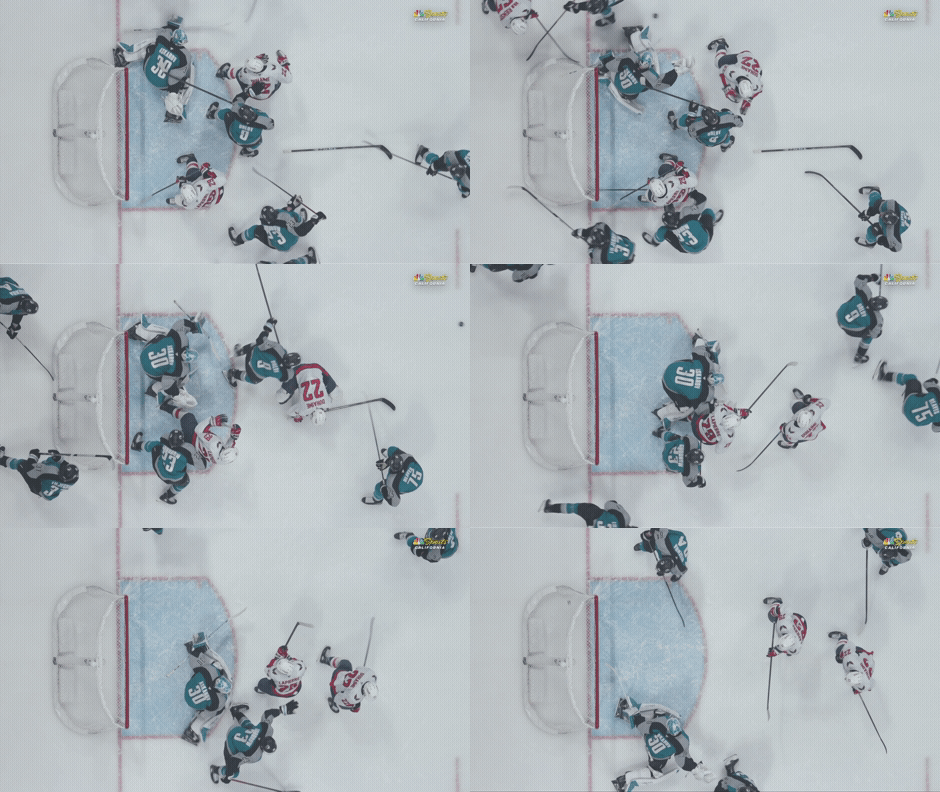
The result: With the call on the ice being upheld, Washington took a 2-0 lead in the game and got a two-minute power play from San Jose's failed challenge. They did not score on the man advantage.
*Wednesday, Dec. 3: Buffalo at Philadelphia
The situation: Midway through the first period with the Sabres leading 1-0, the Flyers have control of the puck in Buffalo's zone and are on the power play. Travis Konecny gets the puck at the blue line, puts it on net, and beats Colten Ellis. Just as the puck arrives, Flyers forward Owen Tippett gets to the top of the crease to screen Ellis. After the puck goes in, Ellis appeals to the referee about potential interference, but the call on the ice is that it's a goal. But Buffalo challenges the play.
The ruling: Tippett was outside of the crease when he arrived and appeared to be bumped into the blue ice by Buffalo defenceman Mattias Samuelsson. After review, the call on the ice stood and the game was tied 1-1.
Via the NHL: "The play on the ice was challenged under Rule 38 – Coach’s Challenge. Rule 38.1 states, 'In all Coach’s Challenge situations, the original call on the ice will be overturned if, and only if, a conclusive and irrefutable determination can be made on the basis of video evidence that the original call on the ice was clearly not correct. If a review is not conclusive and/or there is any doubt whatsoever as to whether the call on the ice was correct, the original call on the ice will be confirmed.'
Video review confirmed no goaltender interference infractions occurred prior to Travis Konecny’s goal."
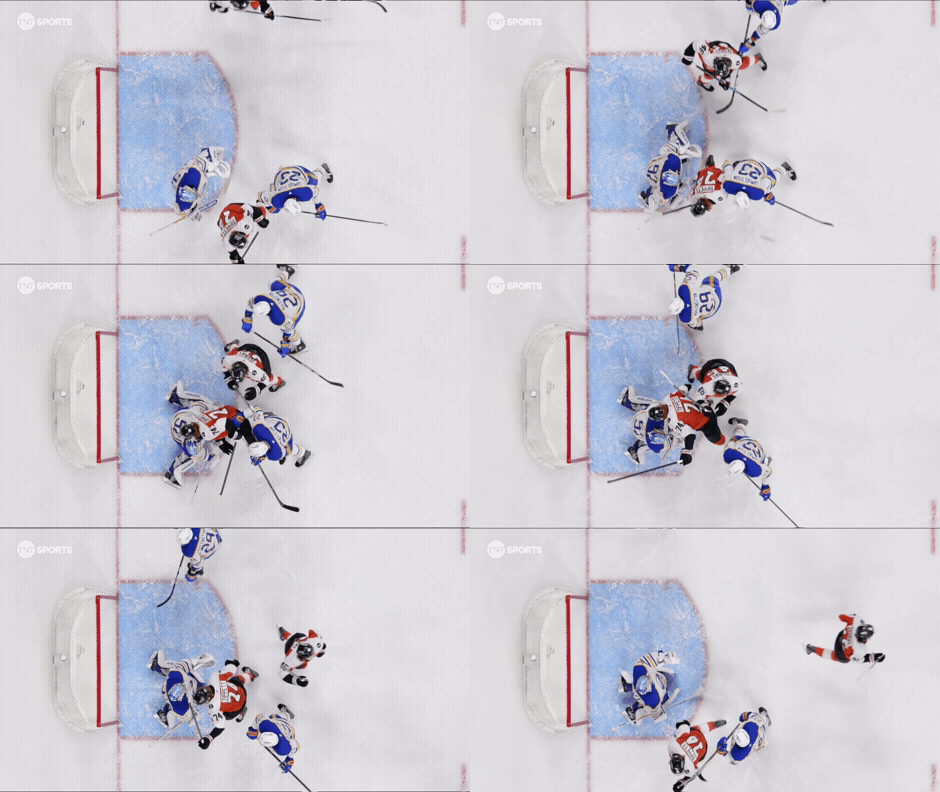
The result: Because of the failed challenge, Buffalo was given a two-minute penalty. The Flyers scored on the ensuing man advantage to take a 2-1 lead. This was the fourth time this season a team scored on the power play following a failed coach's challenge for goalie interference. That goal gave the Flyers a lead they would not relinquish, winning the game 5-2.
*Monday, Dec. 1: Pittsburgh at Philadelphia
The situation: Early in the third period with the Penguins holding a 3-1 lead, Pittsburgh cycles the puck around the Flyers' zone. Ryan Shea passes the puck to Anthony Mantha, who comes in off the wing and shoots the puck on net. Evgeni Malkin is standing in front of the net, the puck bounces off his shin pads and in, and the Penguins appear to take a 4-1 lead. However, the Flyers challenge the play for goalie interference.
The ruling: After a review, it was determined that when Malkin initially arrived at the front of the net, he went into the blue ice on his own and made contact with Flyers goalie Dan Vladar, who didn't have time to reset ahead of Mantha's shot. No goal.
Via the NHL: Video review determined Pittsburgh’s Evgeni Malkin impaired Dan Vladar’s ability to play his position in the crease prior to the goal. The decision was made in accordance with Rule 69.1 which states, in part, “Goals should be disallowed only if: (1) an attacking player, either by his positioning or by contact, impairs the goalkeeper’s ability to move freely within his crease or defend his goal.”
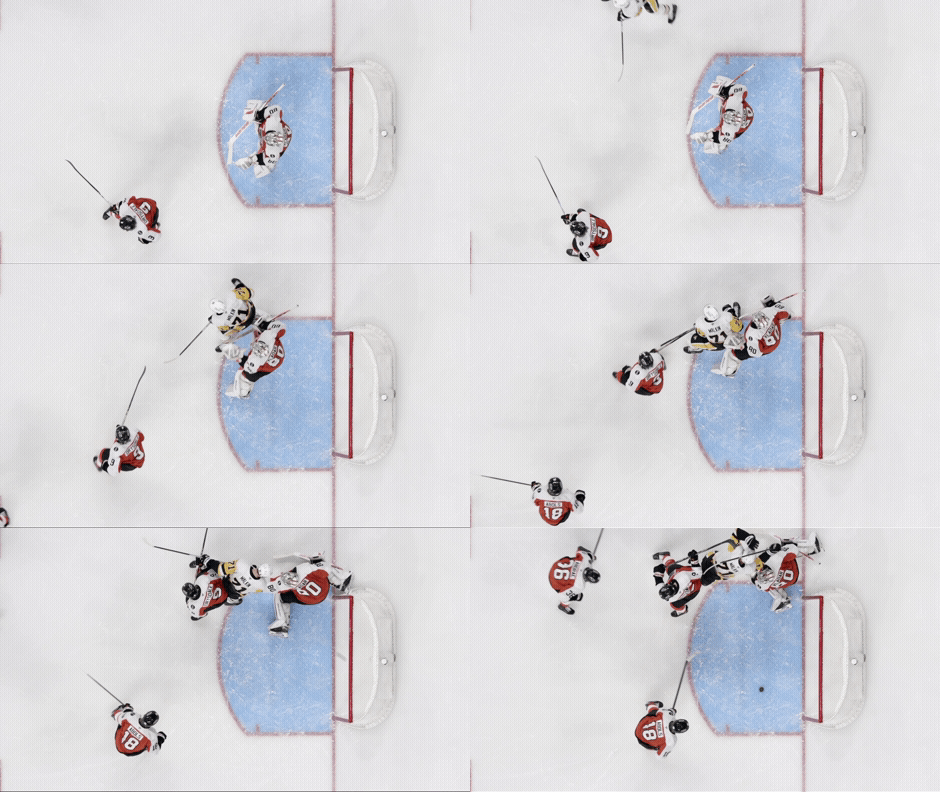
The result: The Penguins' lead remained 3-1 instead of 4-1, but they went on to score two other goals in the third period and won the game 5-1.
*Monday, Dec. 1: Columbus at New Jersey
The situation: Late in the first period, New Jersey has a 2-1 lead and control the puck in the offensive zone when a shot is taken from the point. The puck arrives at Columbus goalie Elvis Merzlikins just as the Devils' Stefan Noesen spins to the top of the crease and makes contact with the netminder. The puck ends up loose in the crease, with Merzlikins sprawling on his back, until Timo Meier puts it in the net. The referees discuss and announce it was a "good hockey goal" but the Blue Jackets quickly challenge for goalie interference.
The ruling: The call on the ice was overturned and the goal is taken off the board.
Via the NHL: "Video review determined that New Jersey’s Stefan Noesen contacted Elvis Merzlikins in the crease, which impaired his ability to play his position prior to Timo Meier’s shot entering the net. The decision was made in accordance with Rule 69.1 which states, in part, 'Goals should be disallowed only if: (1) an attacking player, either by his positioning or by contact, impairs the goalkeeper’s ability to move freely within his crease or defend his goal.'”
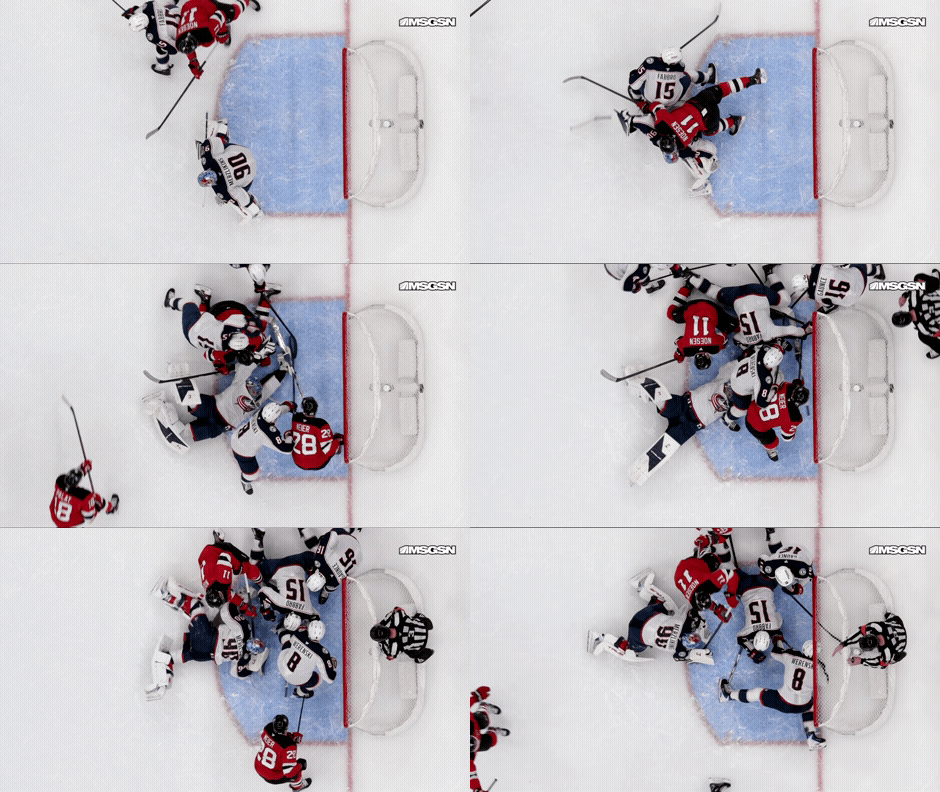
The result: Instead of going up 3-1 in the opening period, the Devils maintained a 2-1 lead, which they took into the first intermission.
Saturday, Nov. 29: Vancouver at Los Angeles
The situation: With about a minute left in overtime, the Los Angeles Kings attacked Vancouver's zone. After Quinton Byfield whiffed on a one-time attempt, the puck found its way to Adrian Kempe, who put it in the net from the slot. However, after Byfield missed the puck, he continued towards the crease. As Kevin Lankinen attempted to move to his left, he bumped into Byfield, who was not in the crease at the time. Because this play happened in overtime, the review was initiated by The Situation Room.
The ruling: After a quick review, the call on the ice was upheld and the goal counted.
Via the NHL: "After video review, it was confirmed that the incidental contact between Los Angeles’ Quinton Byfield and Vancouver’s goaltender Kevin Lankinen occurred in the white ice and, therefore, did not constitute goaltender interference."
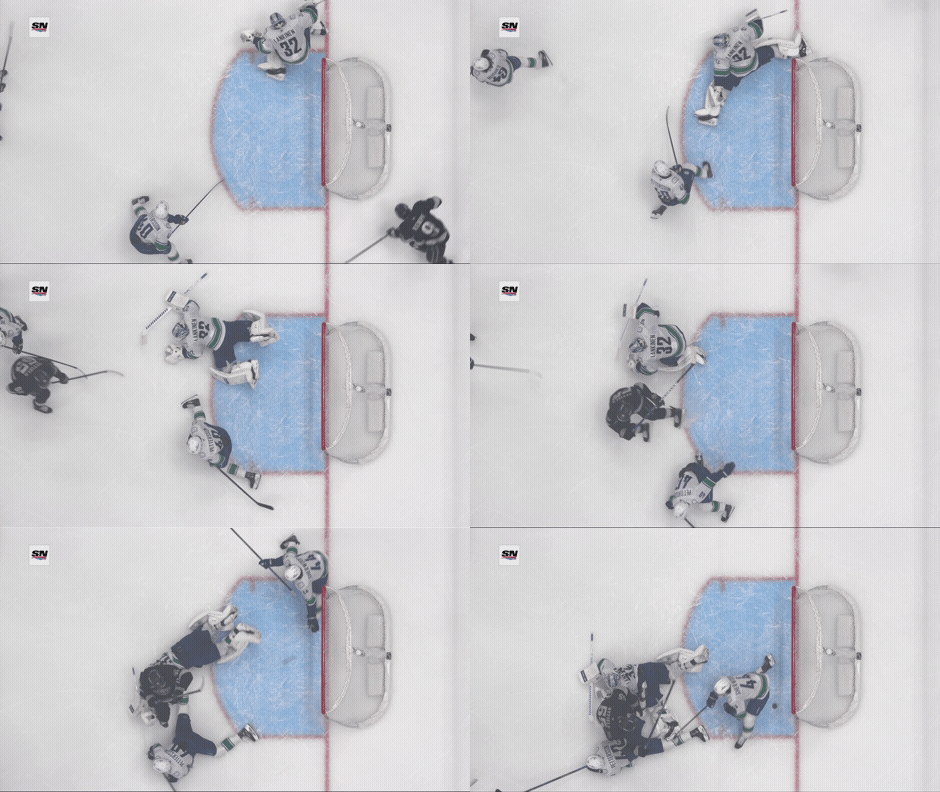
The result: The Kings won the game 2-1.
*Saturday, Nov. 29: Montreal at Colorado
The situation: In the first period, with Colorado holding a 1-0 lead, Brock Nelson took a shot from the slot, which got past Jakub Dobes. As Nelson shot the puck, Avalanche forward Gabriel Landeskog was taken down by Josh Anderson and made contact with Dobes as the puck went into the net. Canadiens coach Martin St. Louis challenged for goaltender interference.
The ruling: The Situation Room upheld the goal and credited Landeskog for it, as contact was initiated by Anderson.
Via the NHL: Video review determined that the actions of Montreal’s Josh Anderson caused the collision with Jakub Dobes prior to Brock Nelson’s goal. The decision was made in accordance with Note 2 of Rule 38.11 (ii), which states, in part, that the goal should be allowed because “the attacking Player was pushed, shoved or fouled by the defending Player causing the attacking Player to come into contact with the goalkeeper.”
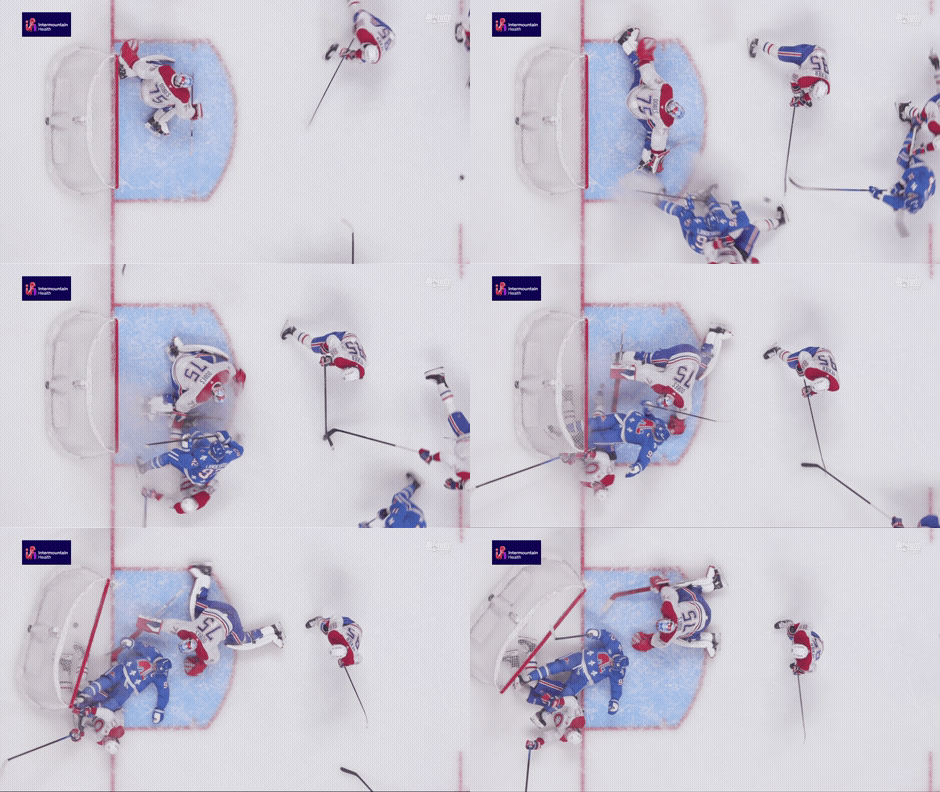
The result: The Canadiens killed off the two-minute minor penalty for the failed challenge.
*Sunday, Nov. 23: Carolina at Buffalo
The situation: In the middle of the first period with Buffalo holding a 1-0 lead, Sabres defenceman Jacob Bryson took a pass across the blue line, moved down to the circle and ripped a wrist shot into the net, but it was immediately waved off as no-goal by the official for goalie interference. As Bryson is moving to take his shot, then shoots, Zach Benson is attempting to screen Frederik Andersen at the top of the crease. Buffalo challenges the ruling in an attempt to put the goal on the board.
The ruling: After a fairly quick review, the official announces the call on the ice stands, no goal.
Via the NHL: "Video review supported the Referees’ call on the ice that Buffalo’s Zach Benson’s skate contact with Frederik Andersen’s pad impaired his ability to play his position prior to the puck entering the net. The decision was made in accordance with Rule 69.1, which states in part, 'Goals should be disallowed only if: (1) an attacking player, either by his positioning or by contact, impairs the goalkeeper’s ability to move freely within his crease or defend his goal.'"
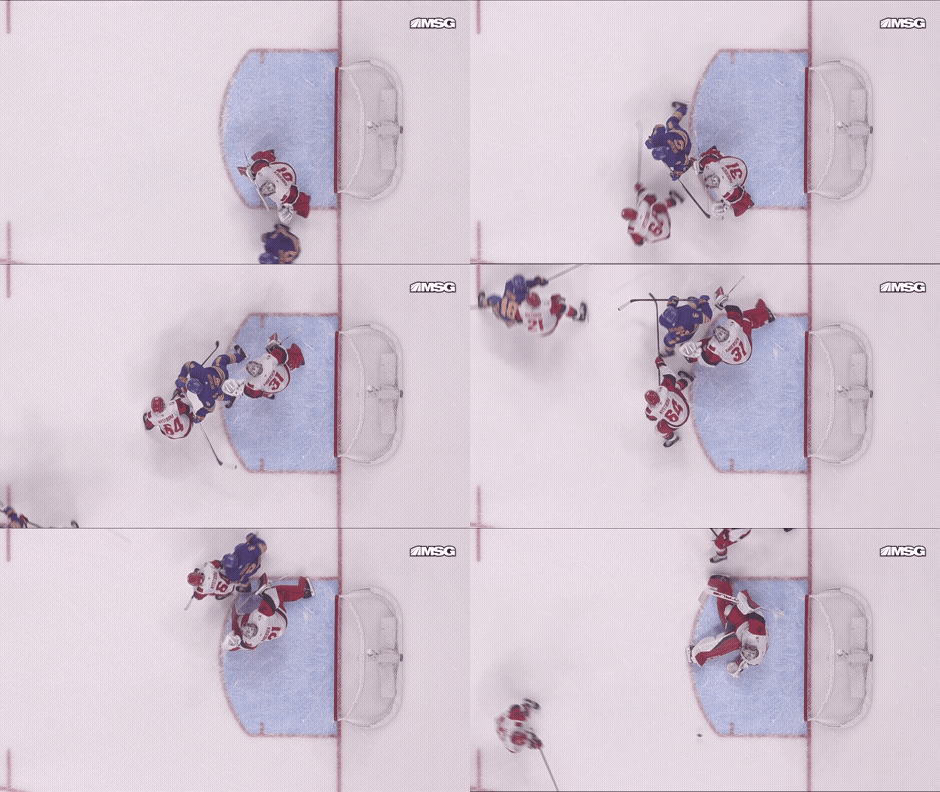
The result: The Sabres' failed attempt gave them a two-minute penalty, but Carolina failed to score on the ensuing power play. Buffalo went on to win the game 4-1.
*Saturday, Nov. 22: Columbus at Detroit
The situation: Early in the second period of a 1-1 game, the Blue Jackets are working the puck along the blue line when Denton Mateychuk takes a shot on net that is tipped in front by Miles Wood and beats Detroit goalie Cam Talbot. However, as Wood is coming across the crease before the tip, he makes contact with Talbot's glove, so the Red Wings challenge the play for goalie interference.
The ruling: After review, the referee announced there was no goalie interference on the play, so the call on the ice stood. Columbus took a 2-1 lead.
Via the NHL: "Video review confirmed that Miles Wood was outside of the crease when he made incidental contact with Cam Talbot and therefore it did not constitute goaltender interference."
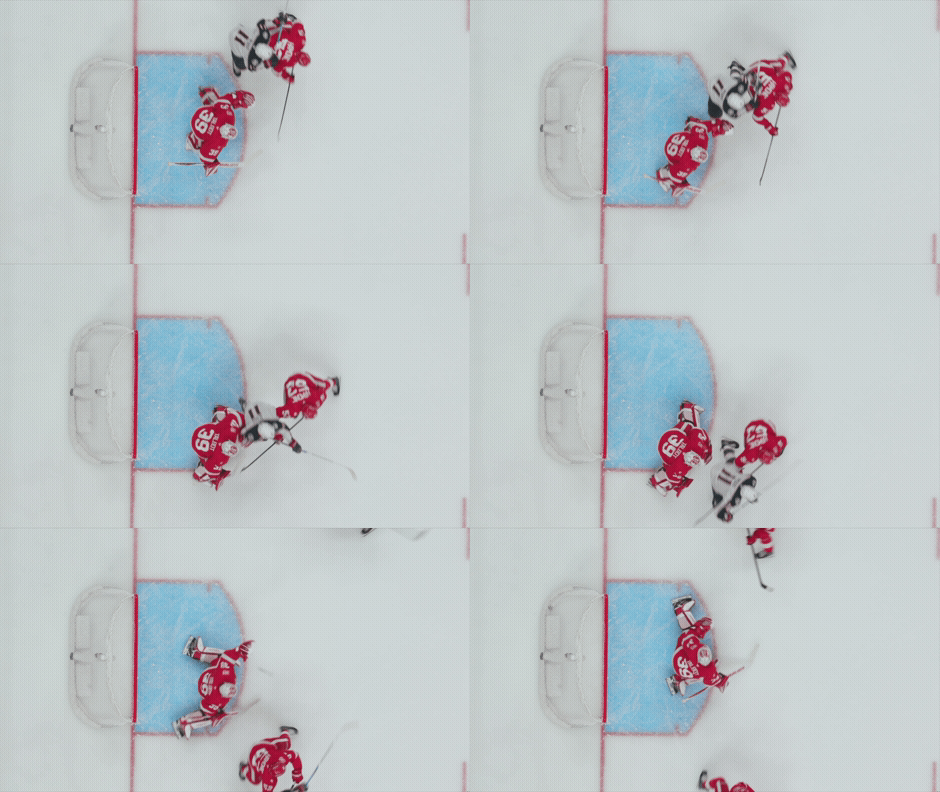
The result: The Red Wings were given a two-minute penalty for the failed challenge, but Columbus did not score on the ensuing power play. The Red Wings went on to win the game 4-3 in OT.
*Wednesday, Nov. 19: Calgary at Buffalo
The situation: Late in the first period with the Flames leading 2-0, Buffalo has the puck in the offensive end off a broken play. As the puck heads to the point, Tage Thompson moves down towards the crease, bumps into Rasmus Andersson in the slot and loses his balance. He stumbles into Calgary goalie Devin Cooley, brushing him in the crease, as Rasmus Dahlin's shot goes in the net. The Flames take a timeout and then challenge the call on the ice.
The ruling: After a brief review, the goal was overturned and the game remained 2-0 Calgary.
Via the NHL: "Video review determined Buffalo’s Tage Thompson impaired Devin Cooley’s ability to play his position in the crease prior to Rasmus Dahlin’s goal. The decision was made in accordance with Rule 69.1 which states, in part, 'Goals should be disallowed only if: (1) an attacking player, either by his positioning or by contact, impairs the goalkeeper’s ability to move freely within his crease or defend his goal.'"

The result: A night after failing a goalie interference challenge against Chicago, the Flames get this one right. However, it came with some controversy as Thompson sounded off on the league's decision to call the goal back.
"I thought that was a horrible call," Thompson said to Mike Harrington of The Buffalo News. "It's called a goal on the ice. And I think there's minimal contact there, if any. And then I think he squared to the shot for a good 2-3 seconds, and (Dahlin's) shot goes bar down. So it's not like it's into the middle of the net where he can't react to make a save."
*Tuesday, Nov. 18: Utah at San Jose
The situation: With just over six minutes left in the third period, San Jose holds a 2-1 lead. Utah wins an offensive zone face-off, gets the puck back to the point, and John Marino appears to score to tie the game. However, as the shot is taken, Dylan Guenther is spinning to try and get inside position while his skate is in the crease, and he makes contact with San Jose goalie Yaroslav Askarov's leg, knocking him to the ice. The call on the ice is no goal due to goalie interference, but Utah challenges the play.
The ruling: After a quick review, the no-goal call on the ice stands and the game remains 2-1 San Jose.
Via the NHL: "Video review confirmed that Utah’s Dylan Guenther impaired Yaroslav Askarov’s ability to play his position in the crease before the puck entered the net. The decision was made in accordance with Rule 69.1 which states, in part, 'Goals should be disallowed only if: (1) an attacking player, either by his positioning or by contact, impairs the goalkeeper’s ability to move freely within his crease or defend his goal.'"
The result: The Sharks not only maintain the lead, but head to the power play after Utah's failed challenge. San Jose did not score on the man advantage and soon after it expired, Utah tied the game anyway. The two teams ended regulation in a tie and Macklin Celebrini scored his hat trick goal in overtime to give San Jose the win.
Tuesday, Nov. 18: NY Islanders at Dallas
The situation: In the dying seconds of the third period, the Islanders have a 3-2 lead and a five-minute power play. Dallas pulls its goalie and has control in the offensive zone trying to tie the game. As a final attempt shot from the point comes in, Jason Robertson crashes the crease at about the same time the puck arrives, makes contact with Islanders goalie David Rittich, and Wyatt Johnston bangs in the rebound. The game appears to be tied as the call on the ice is a goal. Because this play was in the final minute of regulation, the Situation Room initiates a challenge.
The ruling: The call on the ice is overturned for goalie interference.
Via the NHL: "Video review determined Dallas’ Jason Robertson impaired David Rittich’s ability to play his position in the crease prior to Wyatt Johnston’s goal. The decision was made in accordance with Rule 69.1 which states, in part, 'Goals should be disallowed only if: (1) an attacking player, either by his positioning or by contact, impairs the goalkeeper’s ability to move freely within his crease or defend his goal.'"
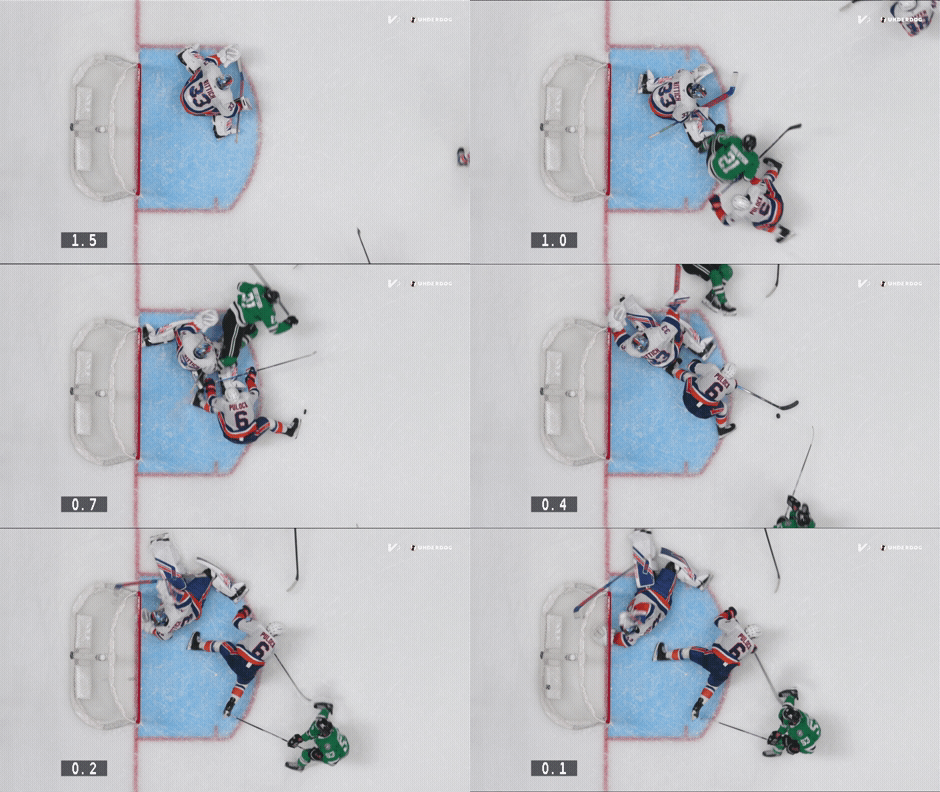
The result: After review, 0.1 seconds is put back on the clock. The Islanders hold on to win the game in regulation.
*Tuesday, Nov. 18: Calgary at Chicago
The situation: Late in the first period of a 0-0 game, Chicago has control in the offensive zone. The puck bounces to Ryan Donato in the slot, who takes a shot that is blocked in front and is followed up by a shot from Louis Crevier, which is also blocked. Donato gets another chance to shoot and scores to make it 1-0. All the while, Chicago's Sam Lafferty is battling for position in front. Calgary challenges that he interfered with Flames goalie Dustin Wolf.
The ruling: After a quick review, it was determined the contact made between Lafferty and Wolf was not goaltender interference.
Via the NHL: "Video review confirmed no goaltender interference infractions occurred prior to Ryan Donato’s goal."

The result: Calgary was given a two-minute penalty for the failed challenge, but Chicago did not score on the man advantage.
*Thursday, Nov. 13: New York Islanders at Vegas
The situation: Midway through the third period in a 2-2 game, the Golden Knights have pressure in the offensive zone and Reilly Smith scores what appears to be the go-ahead goal in a scramble in front of the net. The New York Islanders challenge the play for goalie interference, perhaps believing Brett Howden pushed Kyle Palmieri into his own goalie.
The ruling: After a short review, the call on the ice stands and Vegas goes up 3-2 in the game.
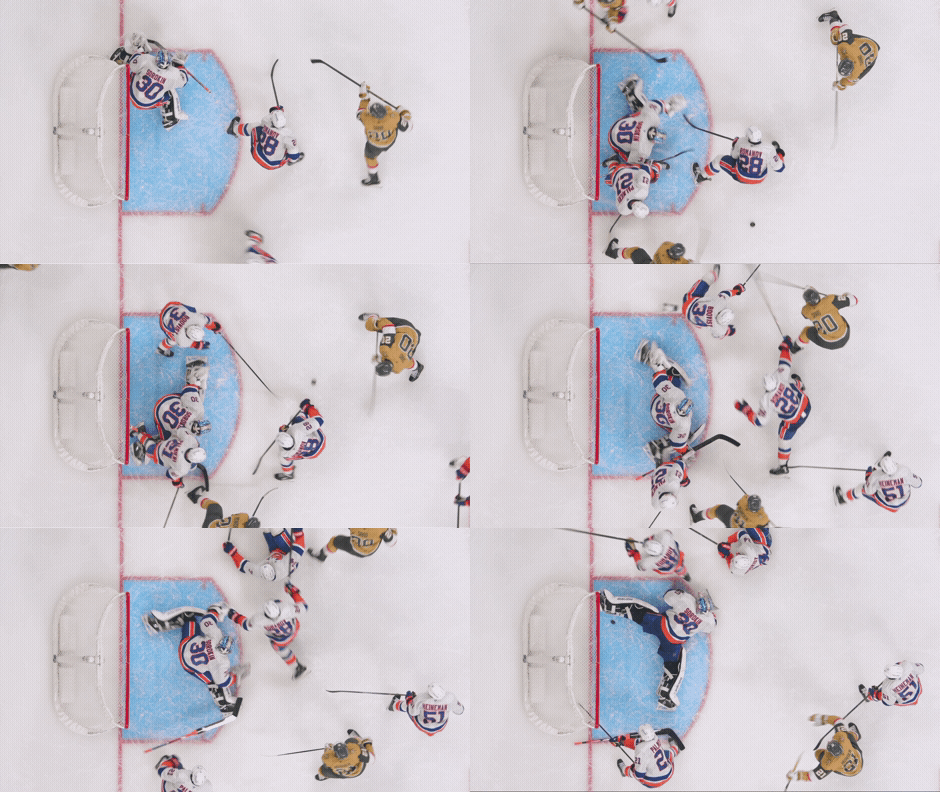
The result: This was the second borderline goalie interference goal by Vegas in the game, with Shea Theodore's goal from earlier in the game being a somewhat controversial one itself as he may have pushed Ilya Sorokin's pad into the net. The Islanders did not challenge the Theodore goal. New York was given a two-minute penalty for the failed challenge on Smith's goal, but Vegas did not score on the power play. The Islanders came back to win the game 4-3 in OT.
*Thursday, Nov. 13: Buffalo at Colorado
The situation: Late in the first period, the Avalanche have a 3-2 lead over the Sabres. Colorado's Victor Olofsson takes a shot from the top of the circle, which is inadvertently blocked by Gabriel Landeskog in front of the crease. Landeskog grabs the loose puck as teammate Jack Drury jostles for position and makes contact with Buffalo goalie Ukko-Pekka Luukkonen. Landeskog puts the puck in the net, but the goal is immediately waved off by the referee for goalie interference. The Avalanche challenge the play, believing Drury was pushed in by Buffalo defender Jacob Bryson.
The ruling: The on-ice call is confirmed and the Avalanche do not score on the play.
Via the NHL: "Video review confirmed the Referee’s call on the ice that Colorado’s Jack Drury’s position in the crease impaired Ukko-Pekka Luukkonen’s ability to play his position prior to the puck entering the net. According to Rule 69.1 which states, in part, 'Goals should be disallowed only if: (1) an attacking player, either by his positioning or by contact, impairs the goalkeeper’s ability to move freely within his crease or defend his goal.'"
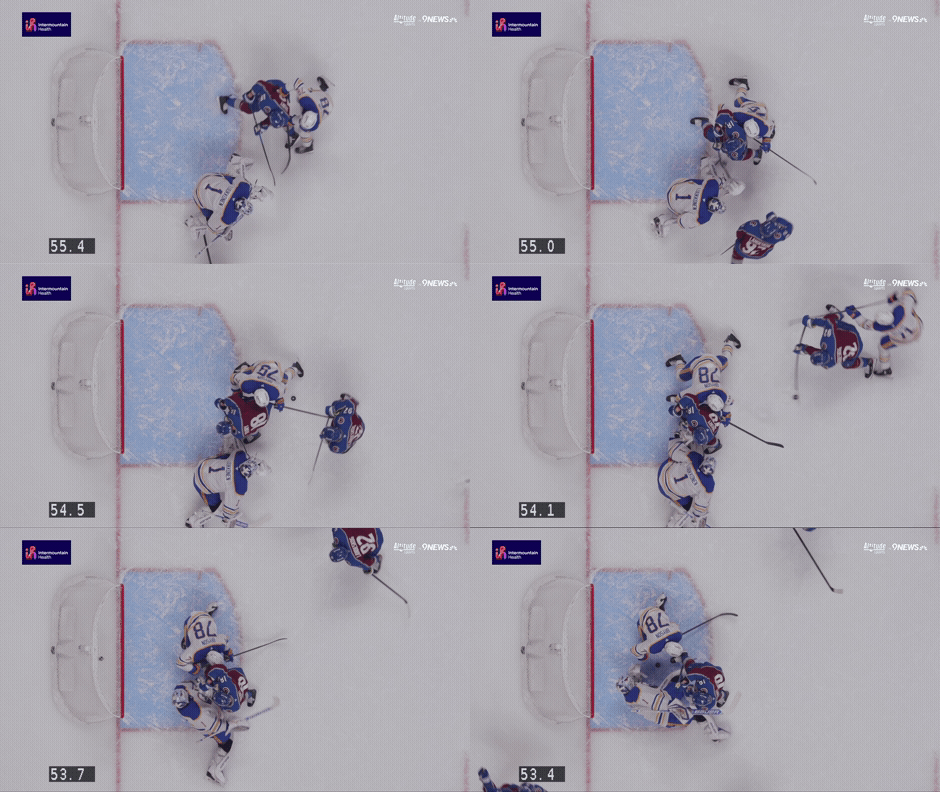
The result: Colorado gets a two-minute minor for the failed challenge, but Buffalo does not score on its power play. The Avalanche went on to win the game 6-3.
*Sunday, Nov. 9: Utah at Ottawa
The situation: In the first few seconds of the third period with Ottawa leading 3-2, Utah has possession of the puck in the offensive zone. Utah's Jack McBain is backing up towards the net from below the goal line and comes into contact with Senators goalie Leevi Merilainen in the crease. McBain falls to the ice as John Marino passes it to him in front and, as Merilainen moves to his other post, McBain puts the puck in. The Mammoth appear to tie the game 3-3, but Ottawa takes a timeout to consider its options and then challenges for goalie interference.
The ruling: The referee announces that McBain made "incidental contact" with the goalie and therefore the goal was overturned.
Via the NHL: "Video review determined that Utah’s Jack McBain impaired Leevi Meriläinen’s ability to play his position prior to the shot entering the net. The decision was made in accordance with Rule 69.1 which states, in part, 'Goals should be disallowed only if: (1) an attacking player, either by his positioning or by contact, impairs the goalkeeper’s ability to move freely within his crease or defend his goal.'"
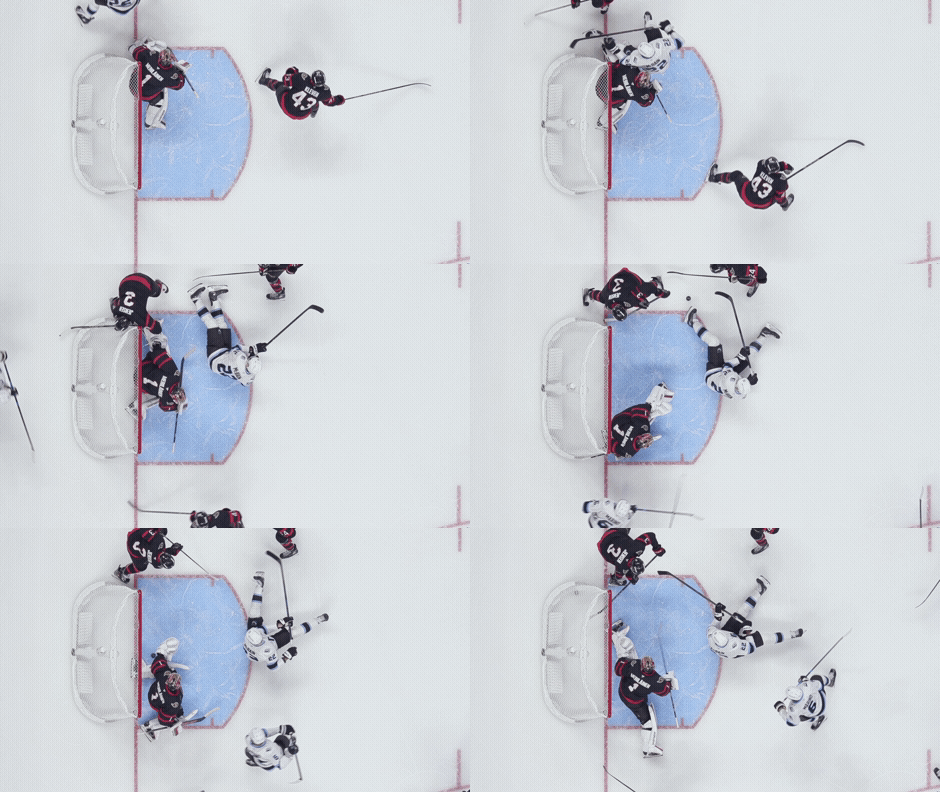
The result: The Senators stay in front 3-2 and a goal from Michael Amadio a few minutes later gives them a two-goal advantage. Ottawa went on to win the game 4-2.
Saturday, Nov. 8: Seattle at St. Louis
The situation: In the dying seconds of the third period, St. Louis leads 3-2. Seattle wins a faceoff in the offensive zone and works the puck along the perimeter. Kraken forward Chandler Stephenson takes a shot on net from the top of the circle that beats Blues goalie Joel Hofer to tie the game with two seconds left. But Jordan Eberle is screening the goalie in front of the net and appears to make contact with Hofer's stick in the crease. Since this goal occurred in the final minute of the third period, the Situation Room calls for a review.
The ruling: After a league-initiated review, the goal stands and the game is tied 3-3.
Via the NHL: "Video review confirmed the actions of Seattle’s Jordan Eberle did not impair Joel Hofer’s ability to play his position in the crease."

The result: After tying the game with two seconds left, the Kraken force overtime and went on to win the game 4-3 in OT. After the game, Blues head coach Jim Montgomery said he was "certain" the goal would be called back and that his team would have won in regulation. The coach said he was so sure this was goalie interference that if there were more time left in the game, he would have initiated a coach's challenge on the play.
*Wednesday, Nov. 5: Chicago at Vancouver
The situation: Midway through the second period in a 0-0 game, Canucks defenceman Filip Hronek takes a shot on net. Vancouver forward Drew O'Connor is in front battling for position with Chicago's Matt Grzelcyk. As the puck arrives, O'Connor makes contact with goalie Spencer Knight. Knight makes the initial save, but as O'Connor's momentum continues, Knight is forced to the ice. O'Connor takes two stabs at the puck before putting it in the net. The ruling on the ice is a goal, but Chicago challenges the play for goaltender interference.
The ruling: After a quick review, the call on the ice is overturned and the score remains 0-0.
Via the NHL: "Video review determined Vancouver’s Drew O’Connor made contact with Spencer Knight and impaired his ability to play his position in the crease prior to the puck entering the net. According to Rule 69.3, 'If an attacking player initiates contact with a goalkeeper, incidental or otherwise, while the goalkeeper is in his goal crease, and a goal is scored, the goal will be disallowed.'"

The result: With a successful challenge the ensuing faceoff comes out of the zone. Chicago went on to win the game 5-2, with every goal being scored in the third period.
*Tuesday, Nov. 4: Winnipeg at Los Angeles
The situation: Mid-way through the first period, the Jets and Kings are tied 0-0. With Winnipeg in possession of the puck in the offensive zone, defenceman Josh Morrissey takes a shot from the point. Gabe Vilardi is positioned in front of Kings goalie Darcy Kuemper, on the edge of the crease. Contact is made and as soon as the puck enters the net, the referee waves it off and rules no goal. Winnipeg decides to challenge the play.
The ruling: After a quick review, the call on the ice stood. No goal.
Via the NHL: "Video review supported the Referees’ call on the ice that Winnipeg’s Gabriel Vilardi impaired the ability of Los Angeles goaltender Darcy Kuemper to play his position in the crease. The decision was made in accordance with Rule 69.1 which states, in part, that 'Goals should be disallowed only if: (1) an attacking player, either by his positioning or by contact, impairs the goalkeeper’s ability to move freely within his crease or defend his goal.'"
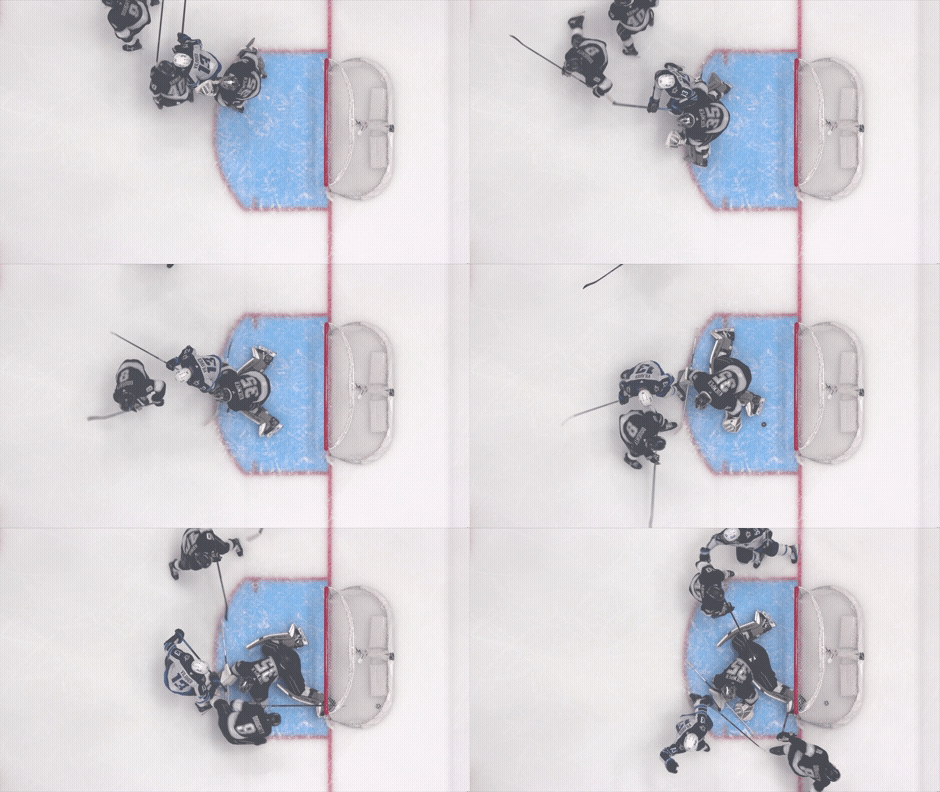
The result: The score remains 0-0 and the Jets are given a two-minute penalty for the failed challenge. Los Angeles doesn't score on the ensuing power play. The Kings went on to win the game 3-0.
*Saturday, Nov. 1: Ottawa at Montreal
The situation: In the dying seconds of the second period, Montreal leads 2-1, but Ottawa has possession of the puck in the offensive zone. Shane Pinto brings the puck to the blue line, then tosses it on net. Michael Amadio tips it and while Sam Montembeault makes the initial save, the rebound hits defenceman Mike Matheson's leg and goes in. However, the referee immediately waves it off as 'no goal' due to goaltender interference. The ref explains that Claude Giroux interfered with Montembeault on the play because the goalie "does not have a chance to reset his position."
Ottawa takes a timeout, then challenges that there was no goalie interference on the play.
The ruling: After reviewing the play, the referee announces that after the initial contact was made by Giroux, "the goaltender has a chance to reset himself," so the ruling on the ice is overturned and the goal stands.
Via the NHL: "Video review determined the actions of Ottawa’s Claude Giroux did not impair Sam Montembeault’s ability to play his position in the crease."
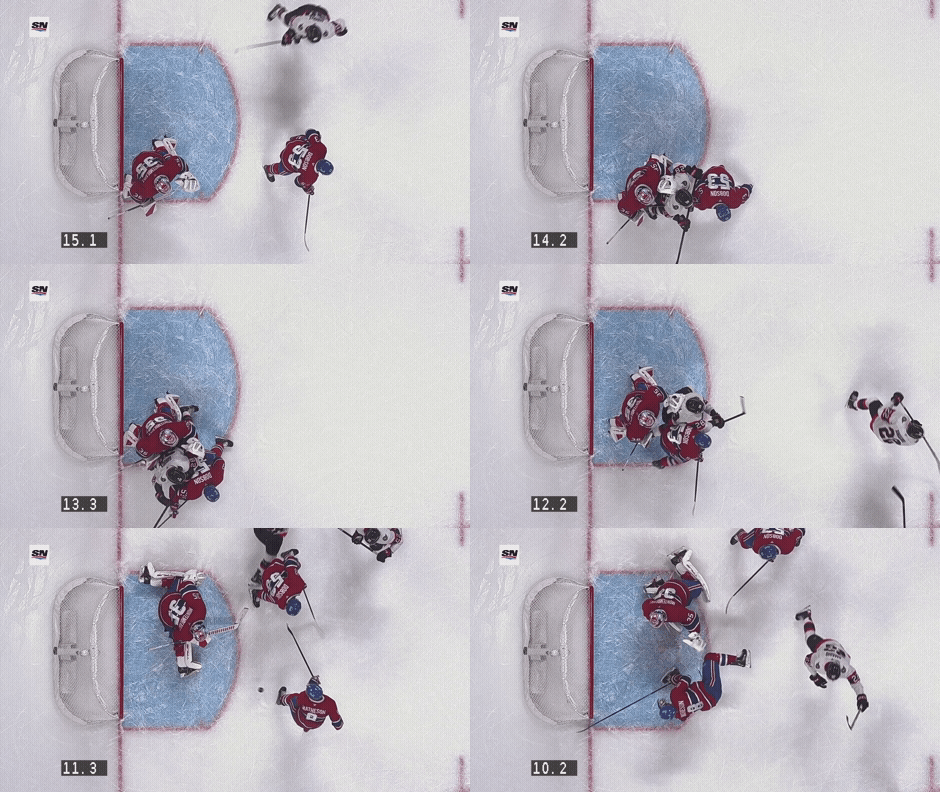
The result: Ottawa ends up tying the game on the play, so the score is tied 2-2 after two periods. The teams exchange goals in the third period, but Montreal wins in overtime, 4-3.
Thursday, Oct. 30: Detroit at Los Angeles
The situation: With less than a minute to go in OT, the Kings are on the power play and controlling play in Detroit's zone. Kevin Fiala is standing in the crease next to Red Wings goalie Cam Talbot when Anze Kopitar sends in a pass to the top of the crease. Fiala puts the puck in the net and the Kings appear to win the game.
The ruling: The call on the ice was overruled by the Situation Room, which steps in for overtime reviews.
Via the NHL: "Video review determined Los Angeles’ Kevin Fiala impaired Cam Talbot’s ability to play his position in the crease prior to his goal. The decision was made in accordance with Rule 69.1 which states, in part, 'Goals should be disallowed only if: (1) an attacking player, either by his positioning or by contact, impairs the goalkeeper’s ability to move freely within his crease or defend his goal.'"
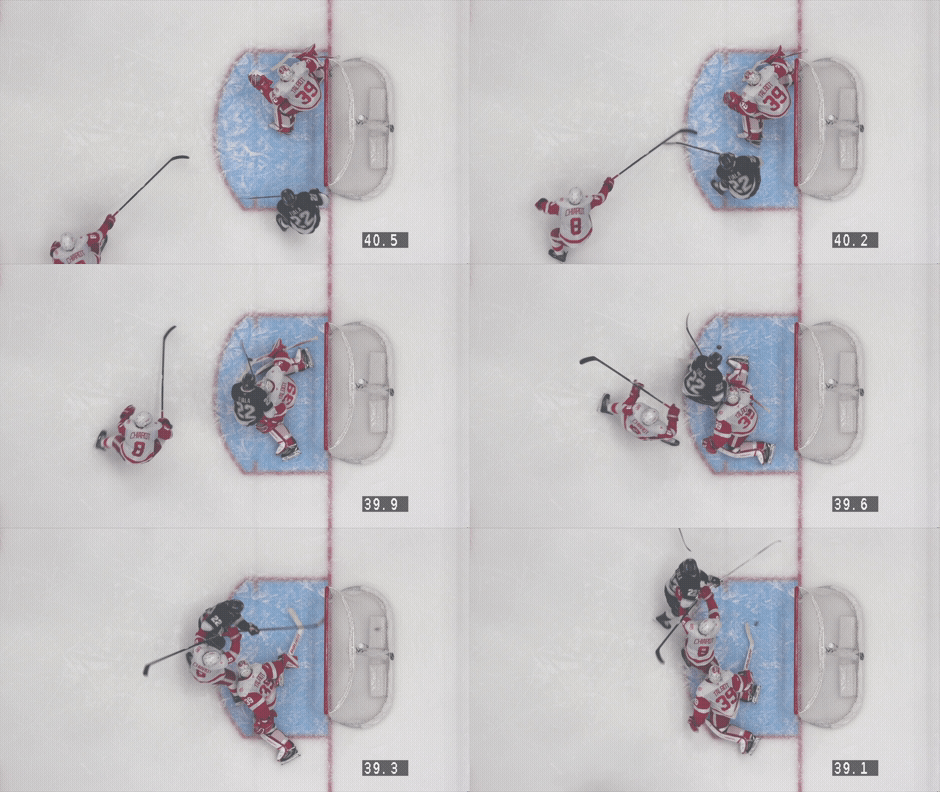
The result: Overtime ended without a resolution. Detroit went on to win the game in a shootout.
*Thursday, Oct. 30: Vancouver at St. Louis
The situation: Late in the third period of a tie game, the Canucks get a shot from the point, which hits a St. Louis defenceman in front and bounces to Evander Kane in the slot. Kane scores to give the Canucks a 4-3 lead. However, as the puck is bouncing in front, Vancouver's Mackenzie MacEachern does at one point make contact with Binnington's skate and gets behind him in the crease. St. Louis challenges the play for goaltender interference.
The ruling: After a lengthy review, it was determined that MacEachern interfered with Binnington and the goal was overturned.
Via the NHL: "Video review determined that Vancouver’s Mackenzie MacEachern impaired Jordan Binnington’s ability to play his position prior to the shot entering the net. According to Rule 69.4, 'If an attacking player initiates any contact with a goalkeeper, other than incidental contact, while the goalkeeper is outside his goal crease, and a goal is scored, the goal will be disallowed.'"

The result: Rather than Vancouver taking a late lead, the game remained tied and stayed that way until the end of regulation. Though the Canucks did go on to win the game in a shootout, the Blues earned a point.
*Thursday, Oct. 30: Buffalo at Boston
The situation: Late in the third period, Boston holds a 3-2 lead over Buffalo. The Sabres win a faceoff in the offensive zone and as Josh Doan goes to the net, Alex Tuch gets the puck in the slot and scores to tie the game. Bruins goalie Joonas Korpisalo appeals with his arms in the air. Boston challenges the play for goalie interference, believing Doan pushed Bruins defenceman Henri Jokiharju into Korpisalo.
The ruling: The call on the ice was upheld and the goal stood.
Via the NHL: "Video review supported the Referee’s call on the ice that the actions of Buffalo’s Josh Doan did not propel Boston’s Henri Jokiharju into Joonas Korpisalo and therefore did not constitute goaltender interference."
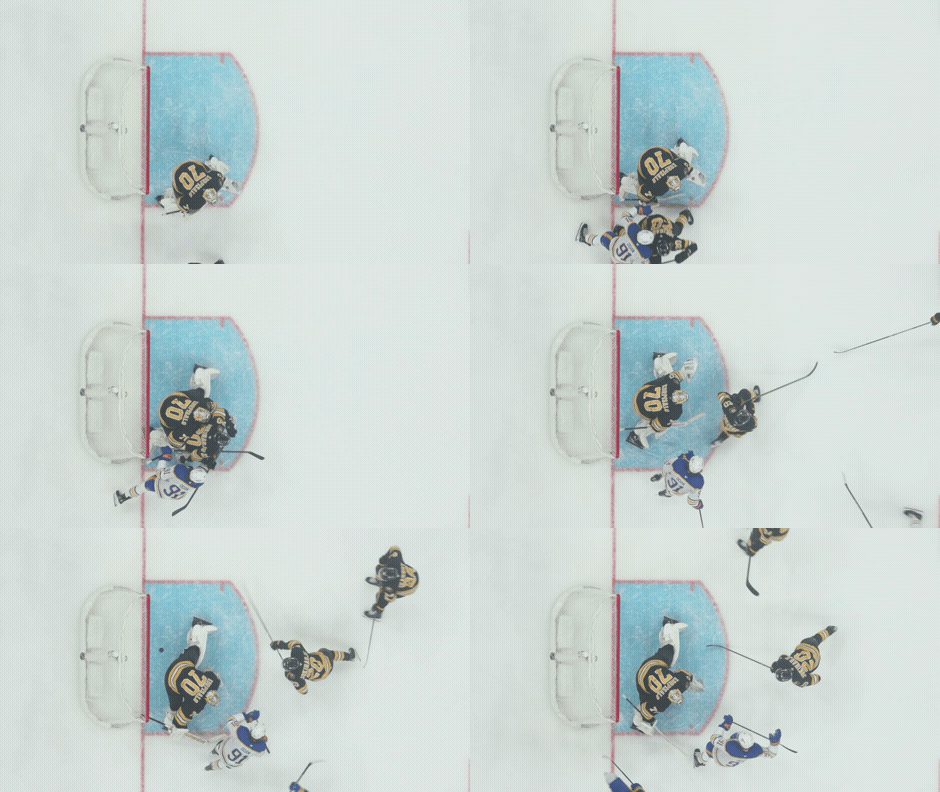
The result: The Bruins were given a two-minute penalty for the failed challenge and went on the PK in a tie game with just over five minutes left in regulation. They killed it off and went on to win the game in OT.
*Thursday, Oct. 30: Pittsburgh at Minnesota
The situation: Late in the first period with Minnesota leading 1-0, the Pittsburgh Penguins are on the attack. As the puck is moved to the front of the net, Justin Brazeau and Jacob Middleton are jockeying for position in front of the net. Both players enter the crease, and both players make contact with goalie Filip Gustavsson just before Evgeni Malkin shoots the puck in the back of the net. The referee immediately waves it off as no goal. The Penguins called time out to consider the play and then challenged that there was no goaltender interference.
The ruling: After a brief review the call on the ice was upheld and there was no goal on the play.
Via the NHL: "Video review confirmed the Referees’ call on the ice that Pittsburgh’s Justin Brazeau made contact with Filip Gustavsson in the crease, which impaired his ability to play his position prior to Evgeni Malkin’s goal. The decision was made in accordance with Rule 69.1 which states, in part, 'Goals should be disallowed only if: (1) an attacking player, either by his positioning or by contact, impairs the goalkeeper’s ability to move freely within his crease or defend his goal.'"
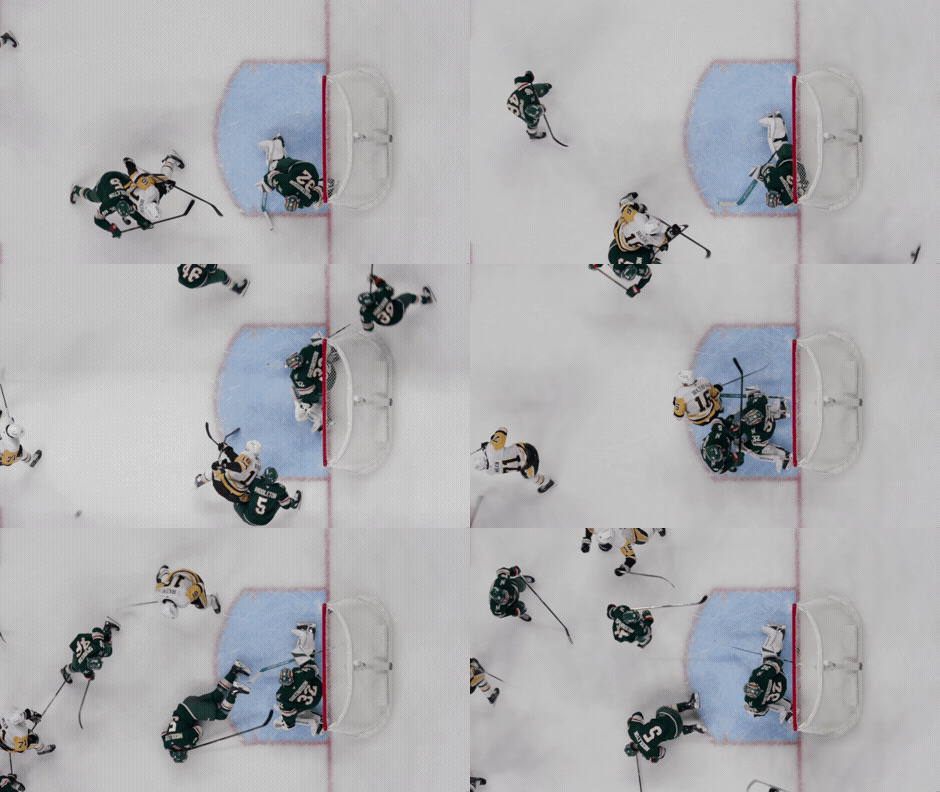
The result: The Penguins were issued a two-minute penalty for the failed challenge and killed it off. Pittsburgh went on to win the game 4-1.
*Saturday, Oct. 25: Ottawa at Washington
The situation: With Ottawa leading 1-0 early in the second period, Shane Pinto rushed down the ice with the puck and drove the net. While being engaged by Washington defenceman Jakob Chychrun, Pinto crashes into the crease. The play was initially reviewed to see if the puck crossed the goal line before the net was displaced and was ruled to be a goal. Ottawa took a 2-0 lead, but Washington then challenged for goalie interference.
The ruling: The referee announced that it was determined Chychrun hit Pinto into the goaltender and the goal stood.
Via the NHL: "Video review determined that the actions of Washington’s Jakob Chychrun caused Ottawa’s Shane Pinto to contact goaltender Charlie Lindgren prior to Pinto’s goal. The decision was made in accordance with Note 2 of Rule 38.11 (ii) which states, in part, that the goal should be allowed because 'the attacking Player was pushed, shoved or fouled by the defending Player causing the attacking Player to come into contact with the goalkeeper.'"
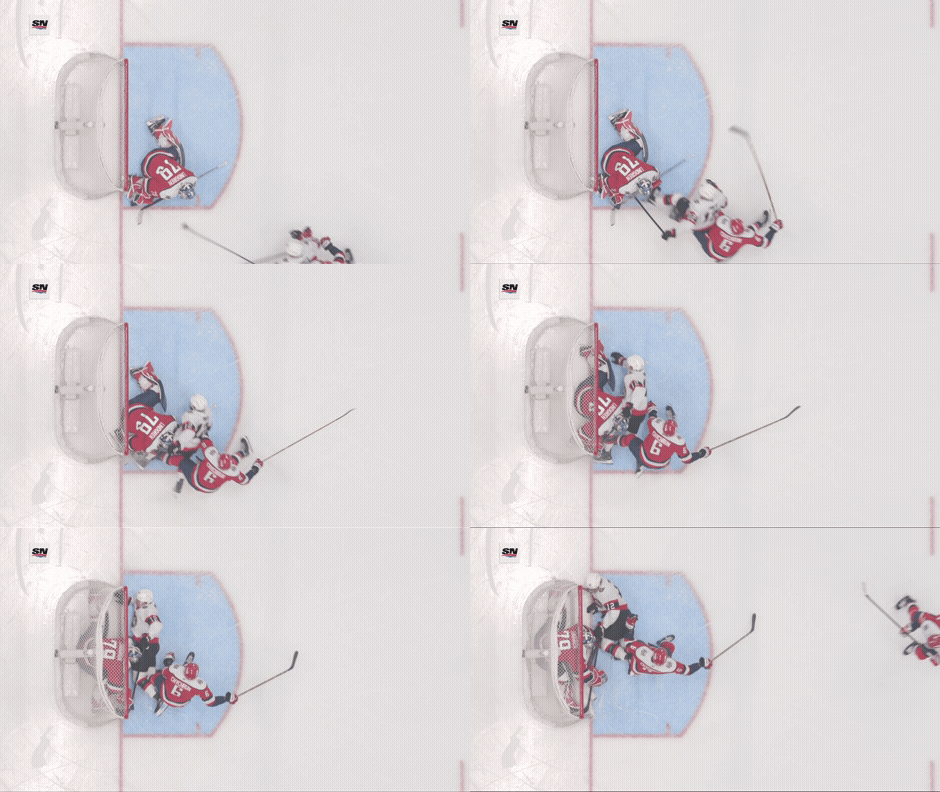
The result: Washington was given a two-minute penalty for the failed challenge, and Ottawa scored on the ensuing power play to take a 3-0 lead. This was the third time this season a team scored on the power play following a failed coach's challenge for goalie interference. The Senators went on to win 7-1.
*Saturday, Oct. 25: Columbus at Pittsburgh
The situation: With Pittsburgh leading 1-0 late in the first period, Columbus' Dante Fabbro puts the puck on net and the initial shot makes it through goalie Arturs Silovs. Charlie Coyle was crashing the net on the shot and arrived in the blue paint when the puck did. He made slight contact with Silovs with his stick, then batted home the loose chance. The Penguins challenged for goalie interference.
The ruling: The call on the ice stood and Columbus tied the game 1-1.
Via the NHL: Video review confirmed that the presence of Columbus’ Charlie Coyle in the Pittsburgh crease did not constitute goaltender interference prior to his goal.

The result: Pittsburgh was given a penalty for the failed challenge, but Columbus failed to score on the power play. The Blue Jackets went on to win the game 5-4 in a shootout.
*Friday, Oct. 24: Calgary at Winnipeg
The situation: Mid-way through the second period in a 1-1 game, the Winnipeg Jets win a faceoff in the offensive zone. Josh Morrissey takes the puck from the blue line to the goal line and puts the puck towards the net. It deflects off Jonathan Toews' stick and into the net while he's in the crease. Calgary challenges for goalie interference.
The ruling: The call on the ice was upheld and the Jets took a 2-1 lead.
Via the NHL: "Video review confirmed the Referee’s call on the ice that the presence of Winnipeg’s Jonathan Toews in the crease did not hinder Dustin Wolf’s ability to play his position prior to Toews’ goal."
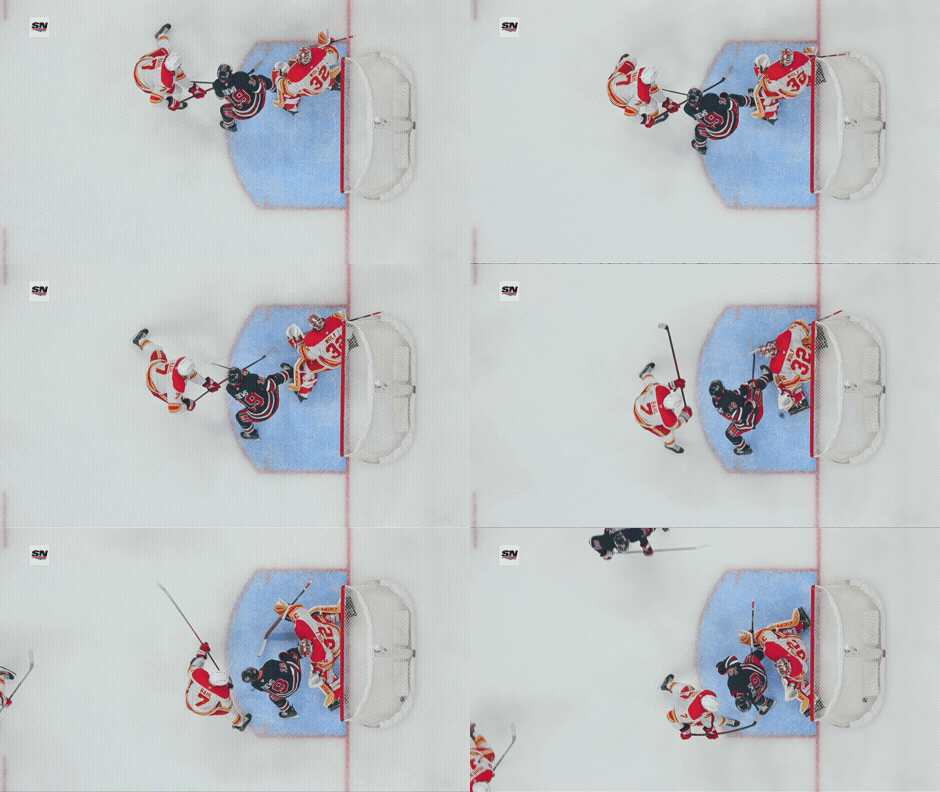
The result: The Flames were given a two-minute penalty for the failed challenge, but the Jets did not score on the power play. Winnipeg never relinquished this lead and won the game 5-3.
*Thursday, Oct. 23: Detroit at NY Islanders
The situation: With just under seven minutes to go in the second period, the Islanders held a commanding 3-0 lead over the Red Wings. On the attack again, Isles defenceman Ryan Pulock puts the puck on net and it's deflected in by Kyle Palmieri. As the puck arrives, Anthony Duclair is battling for position in front of the net and makes slight contact in the crease with Wings goalie Cam Talbot, possibly nudged by the Wings defending player. Detroit challenges for goalie interference.
The ruling: The call on the ice was upheld and the Islanders took a 4-0 lead.
Via the NHL: "Video review confirmed the Referee’s call on the ice that the presence of the attacking player in the crease did not hinder Cam Talbot’s ability to play his position prior to Kyle Palmieri's goal."

The result: The Islanders didn't score on the ensuing power play, but did get another goal before the end of the period.
*Tuesday, Oct. 21: New Jersey at Toronto
The situation: Early in the second period with the Maple leafs ahead 1-0, the Devils control the puck in the offensive zone. As Jack Hughes shoots from the top of the circles, Ondrej Palat is battling for position in front with Chris Tanev. Hughes' shot beats Anthony Stolarz clean and Toronto challenges for goalie interference.
The ruling: The call on the ice was upheld and the Devils tied the game 1-1.
Via the NHL: "Video review confirmed no goaltender interference infractions occurred prior to Jack Hughes’ goal."

The result: The Devils scored on the ensuing power play to take a 2-1 lead in the second period. This was the second time this season a team scored on the power play following a failed coach's challenge for goalie interference. Chris Tanev was injured during Toronto's PK. New Jersey won the game 5-2.
*Sunday, Oct. 19: Vancouver at Washington
The situation: Late in the first period, Vancouver's Filip Chytil drove towards the net and attempted to jam the puck five-hole. After the shot was stopped, a scrum ensued in front of the net as Washington goalie Charlie Lindgren attempted to cover the puck. As Linus Karlsson stabs at it, the puck comes loose to Tyler Myers who fired it into the back of the net. Washington challenged that there was goalie interference on the play.
The ruling: The call on the ice was upheld for a Vancouver goal.
Via the NHL: "Video review confirmed that no goaltender interference infractions occurred prior to Tyler Myers’ goal.
According to rule 69.7: In a rebound situation, or where a goalkeeper and attacking player(s) are simultaneously attempting to play a loose puck, whether inside or outside the crease, incidental contact with the goalkeeper will be permitted, and any goal that is scored as a result thereof will be allowed."
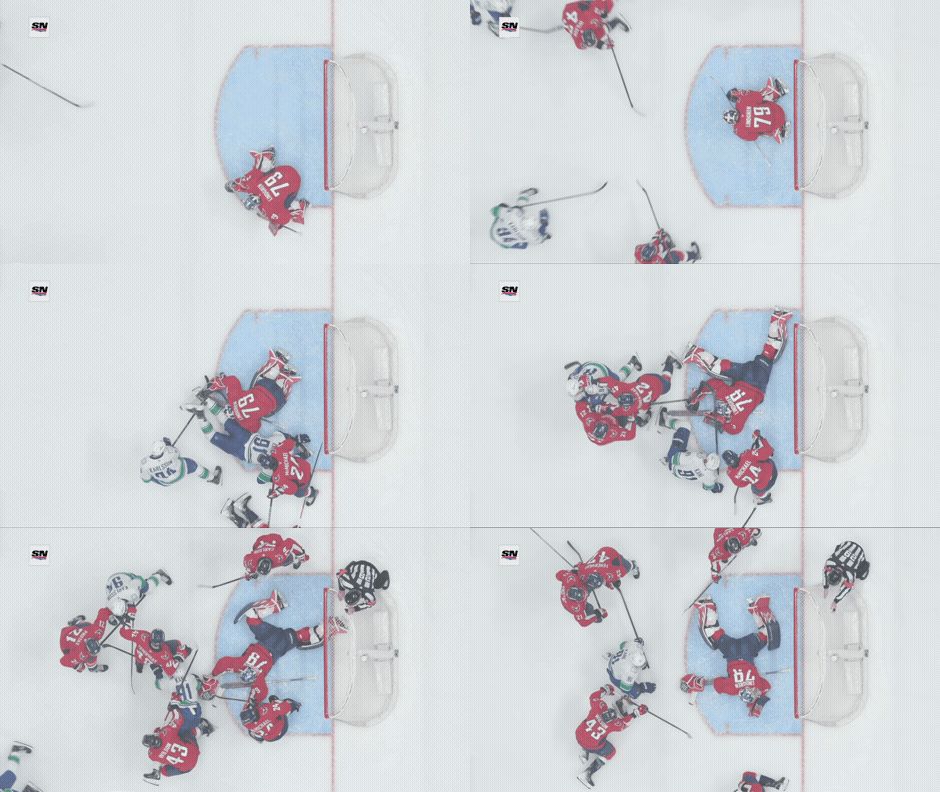
The result: Vancouver took a 2-0 lead and Washington was issued a two-minute penalty for the failed challenge. Kiefer Sherwood scored on the ensuing power play to give the Canucks a 3-0 lead. This was the first time in 2025-26 that a team scored on the power play following a failed coach's challenge for goalie interference. Vancouver won the game 4-3.
*Friday, Oct. 17: Vancouver at Chicago
The situation: Late in the third period of a tie game, Chicago's Tyler Bertuzzi is battling for a rebound in front of the net and his first shot is saved by Vancouver goalie Kevin Lankinen, who covers the puck under his pad/skate against the post. Bertuzzi takes another push at the puck, knocking it loose and into the net. The referee immediately waves it off as no goal. The Blackhawks' bench challenged that there was no goalie interference on the play.
The ruling: The call on the ice stood and there is no goal.
Via the NHL: "Video review supported the Referees’ call on the ice that Kevin Lankinen had covered the puck prior to Tyler Bertuzzi pushing his pad, which caused the puck to enter the net. According to Rule 69.3, 'If an attacking player initiates contact with a goalkeeper, incidental or otherwise, while the goalkeeper is in his goal crease, and a goal is scored, the goal will be disallowed.'"
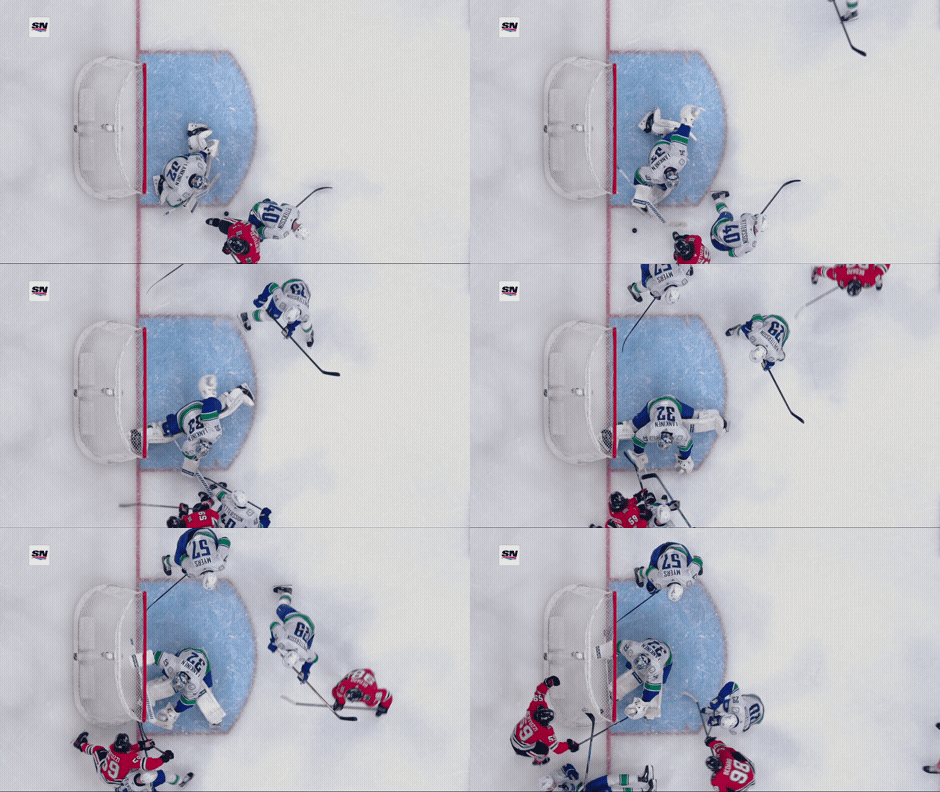
The result: The Blackhawks are given a two-minute penalty for the failed challenge, but kill it off. Vancouver went on to win the game in a shootout.
*Thursday, Oct. 16: Florida at New Jersey
The situation: With just over a minute left in regulation, the Panthers trail by two goals and have pulled their goalie for the extra man. Sam Reinhart's shot from the point beats Jake Allen, but the referee immediately waves it off as no goal, ruling Anton Lundell (who appears to be standing just outside the crease) made "incidental contact" with Allen as the shot came in. The Panthers bench challenges the ruling on the ice.
The ruling: After a lengthy review, the call on the ice stood.
Via the NHL: "Video review supported the referee’s call on the ice that the contact by Florida’s Anton Lundell impaired Jake Allen’s ability to play his position in the crease prior to the puck entering the net. According to Rule 69.3, 'If an attacking player initiates contact with a goalkeeper, incidental or otherwise, while the goalkeeper is in his goal crease, and a goal is scored, the goal will be disallowed.'"
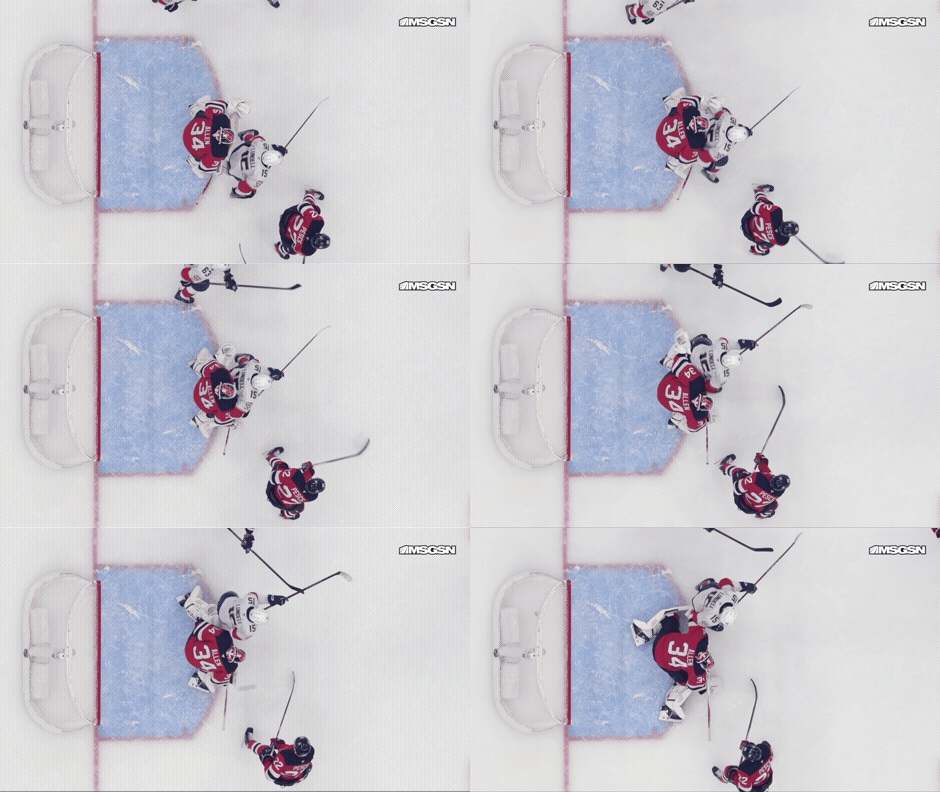
The result: The Panthers were given a two-minute penalty and remained in a two-goal deficit. They went on to lose 3-1.
*Wednesday, Oct. 15: Ottawa at Buffalo
The situation: Early in the second period of a 1-1 game, the Senators were on the power play. Dylan Cozens brings the puck to the front of the net and as he's trying to jam it in against Alex Lyon's pad, a couple other Senators (and Sabres) crash the crease and Ridly Greig makes contact with Lyon. The puck comes loose into the middle of the crease and Jake Sanderson punches it in.
The call on the ice was a goal and the Senators took a 2-1 lead. But Buffalo's bench challenged the play for goalie interference.
The ruling: After a review, the call on the ice stood.
Via the NHL: "Video review confirmed no goaltender interference infractions occurred prior to Jake Sanderson’s goal."

The result: Due to the failed challenge, the Sabres went right back on the PK, but killed it off.
*Monday, Oct. 13: Nashville at Ottawa
The situation: Midway through the second period of a 0-0 game, the Senators won an offensive zone faceoff and put pressure on the Predators. Brady Tkachuk was positioned at the top of Nashville's crease, outside of the blue paint. Tim Stutzle carried the puck into the slot, but after being stick checked and losing possession he continued into Nashville's crease on his own. Stutzle's skate made contact with goalie Juuse Saros' left pad in the blue ice and, immediately after, Jake Sanderson collected the loose puck and his shot beat Saros. The leg Saros would use to push off to challenge the shooter is the one Stutzle made contact with.
The call on the ice was a goal and the Senators took a 1-0 lead. But Nashville's bench challenged the play for goalie interference.
The ruling: After a lengthy review, the call on the ice was overturned and the Ottawa goal was taken off the board.
Via the NHL: "Video review determined Ottawa’s Tim Stutzle entered the crease on his own, made contact with the pad of goaltender Juuse Saros and impaired his ability to play his position prior to Jake Sanderson's goal. The decision was made in accordance with Rule 69.1, which states in part, “Goals should be disallowed only if: (1) an attacking player, either by his positioning or by contact, impairs the goalkeeper’s ability to move freely within his crease or defend his goal.'"
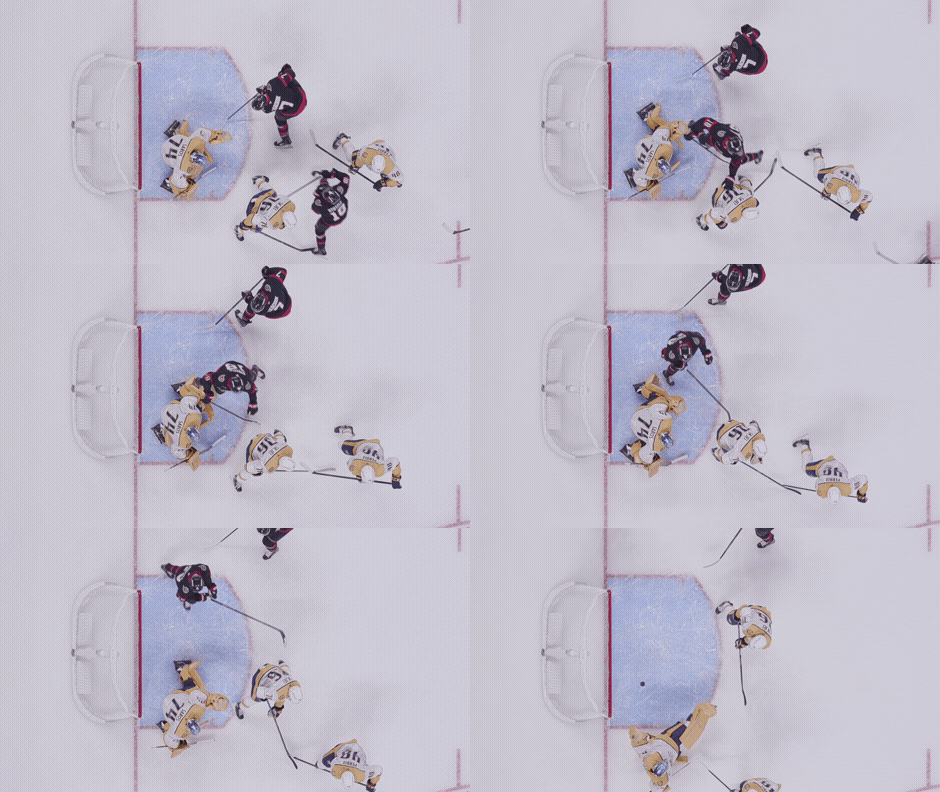
The result: About six minutes later, with 7:49 to go in the second period, Nashville opened the scoring to take a 1-0 lead.
Saturday, Oct. 11: Philadelphia at Carolina
The situation: In overtime, Philadelphia's Travis Sanheim received a pass from Trevor Zegras and drove to the net. He was stick-checked by a Carolina defender who jumped and fell to the ice. Sanheim continued on his path after losing the puck, went through the crease and bumped into Carolina goalie Frederik Andersen. Philadelphia's Bobby Brink picked up the loose puck and scored. The ruling on the ice was a goal, which gave the Flyers a 3-2 win.
The ruling: The call on the ice was overruled by the Situation Room, which steps in for overtime reviews. Sanheim went into the goalie crease on his own and made contact with Andersen in the blue paint.
Via the NHL: "Video review determined Philadelphia’s Travis Sanheim impaired Frederik Andersen’s ability to play his position in the crease prior to Bobby Brink’s goal. The decision was made in accordance with Rule 69.1 which states, in part, 'Goals should be disallowed only if: (1) an attacking player, either by his positioning or by contact, impairs the goalkeeper’s ability to move freely within his crease or defend his goal.'"
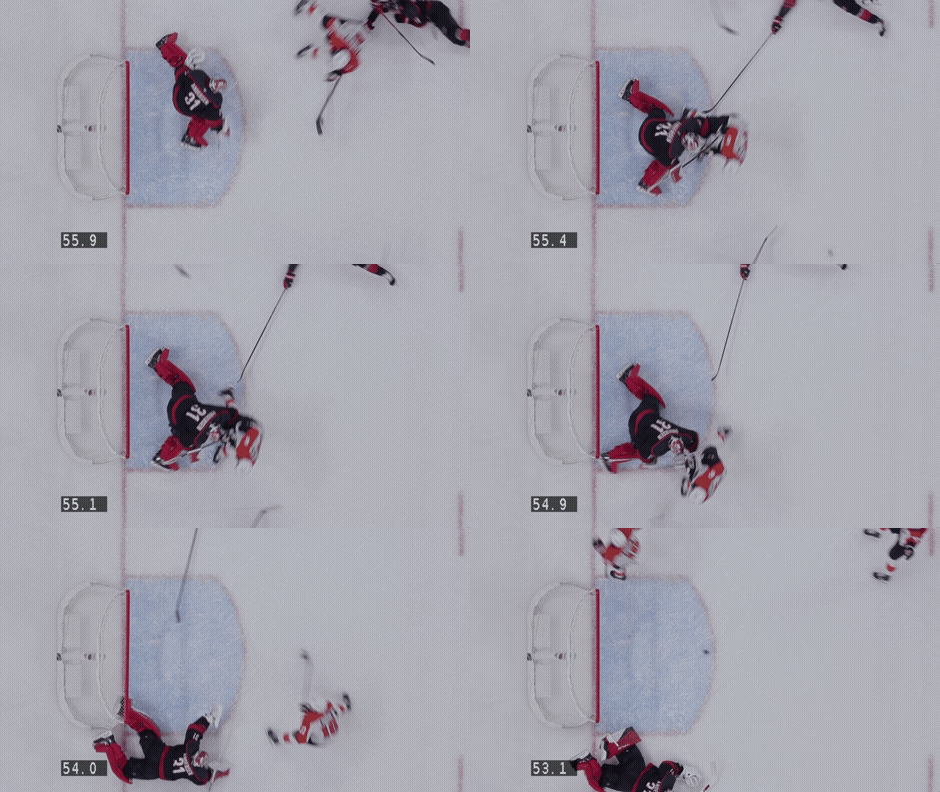
The result: Carolina won the ensuing faceoff on their side of centre ice in the neutral zone and worked the play into Philadelphia's end. About 36 seconds after the reviewed Philadelphia goal, Seth Jarvis scored to give Carolina the 4-3 win.
*Saturday, Oct. 11: Columbus at Minnesota
The situation: Mid-way through the second period, the Wild were on a power play trailing 2-0. After gaining the zone, the Wild began putting pressure on the Blue Jackets and Kirill Kaprizov took a shot from the faceoff dot as Joel Eriksson Ek battled for position in front of the net -- outside of the blue paint -- and got inside the defenceman. Elvis Merzlikins made the first save and as Eriksson Ek battled for the rebound with two Columbus players and the goalie, contact is made with Merzlikins.
Matthew Boldy banged in the rebound to cut Columbus' lead in half, making it a 2-1 game. But Columbus' bench decided to challenge the play for goalie interference.
The ruling: The call on the ice was confirmed, keeping the game 2-1 Columbus. Because it was a failed coach's challenge, the Blue Jackets were issued a two-minute penalty and went right back on the PK.
Via the NHL: "After video review, it was determined that the incidental contact between Minnesota’s Joel Eriksson Ek and Columbus’ goaltender Elvis Merzlikins occurred in the white ice and, therefore, did not constitute goaltender interference."

The result: On the ensuing penalty kill, the Blue Jackets took another penalty for delay of game when Erik Gudbranson shot the puck over the glass, so the Wild got a 5-on-3 advantage. Though Columbus did kill off the penalty they got for the coach's challenge, Minnesota scored a goal before the Blue Jackets could get the returning player into the defensive end. This tied the game 2-2.
*Thursday, Oct. 9: Columbus at Nashville
The situation: In the final seconds of the second period, Columbus gains possession from an offensive zone faceoff and gets the puck to the point. Winger Mathieu Olivier goes to the front of the net to screen Predators goalie Juuse Saros, when a shot comes in from Damon Severson. Saros, who is in the crease, makes the initial save, but Olivier bangs in the rebound. Olivier's skates appear to be in and out of the blue paint, and he makes contact with Saros as Severson's shot arrives.
The call on the ice was a goal, which gave Columbus a 2-1 lead. But Nashville's bench decided to challenge the play for goalie interference.
The ruling: The call on the ice was overturned and the Columbus goal did not stand.
Via the NHL: "Video review determined Columbus’ Mathieu Oliver made contact in the crease with goaltender Juuse Saros that impaired his ability to play his position prior to the goal. The decision was made in accordance with Rule 69.1, which states in part, 'Goals should be disallowed only if: (1) an attacking player, either by his positioning or by contact, impairs the goalkeeper’s ability to move freely within his crease or defend his goal.'"
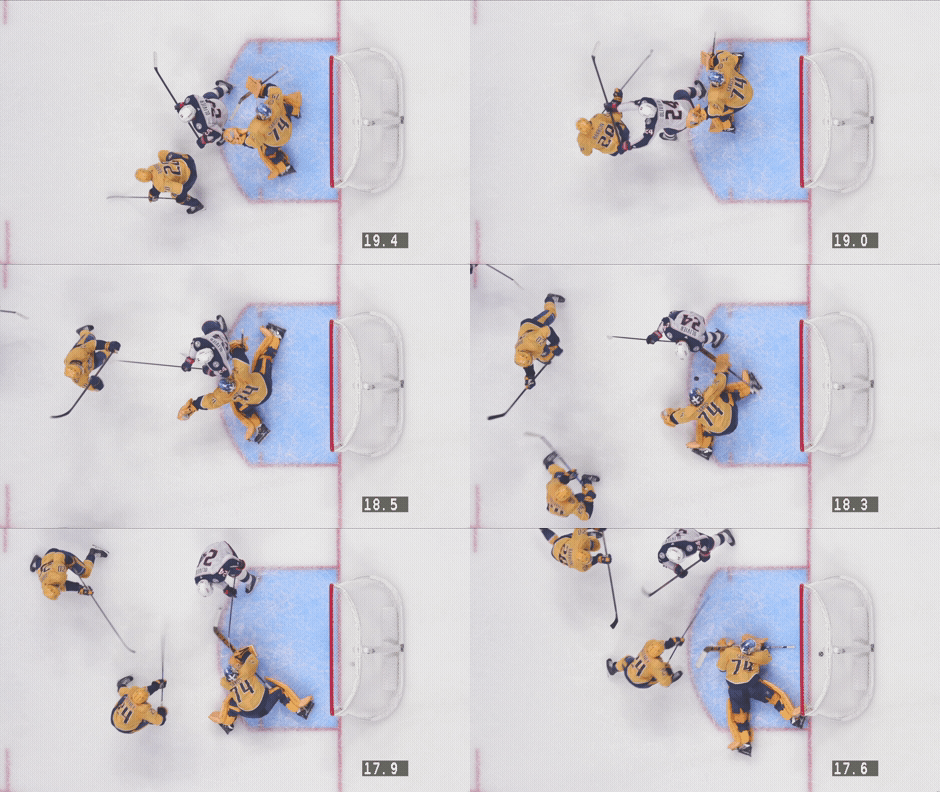
The result: The two teams went into the second intermission tied. Less than three minutes into the third period, Nashville's Ryan O'Reilly scored a power play goal that stood as the game-winner. The Predators won the game 2-1.
 5:30
5:30